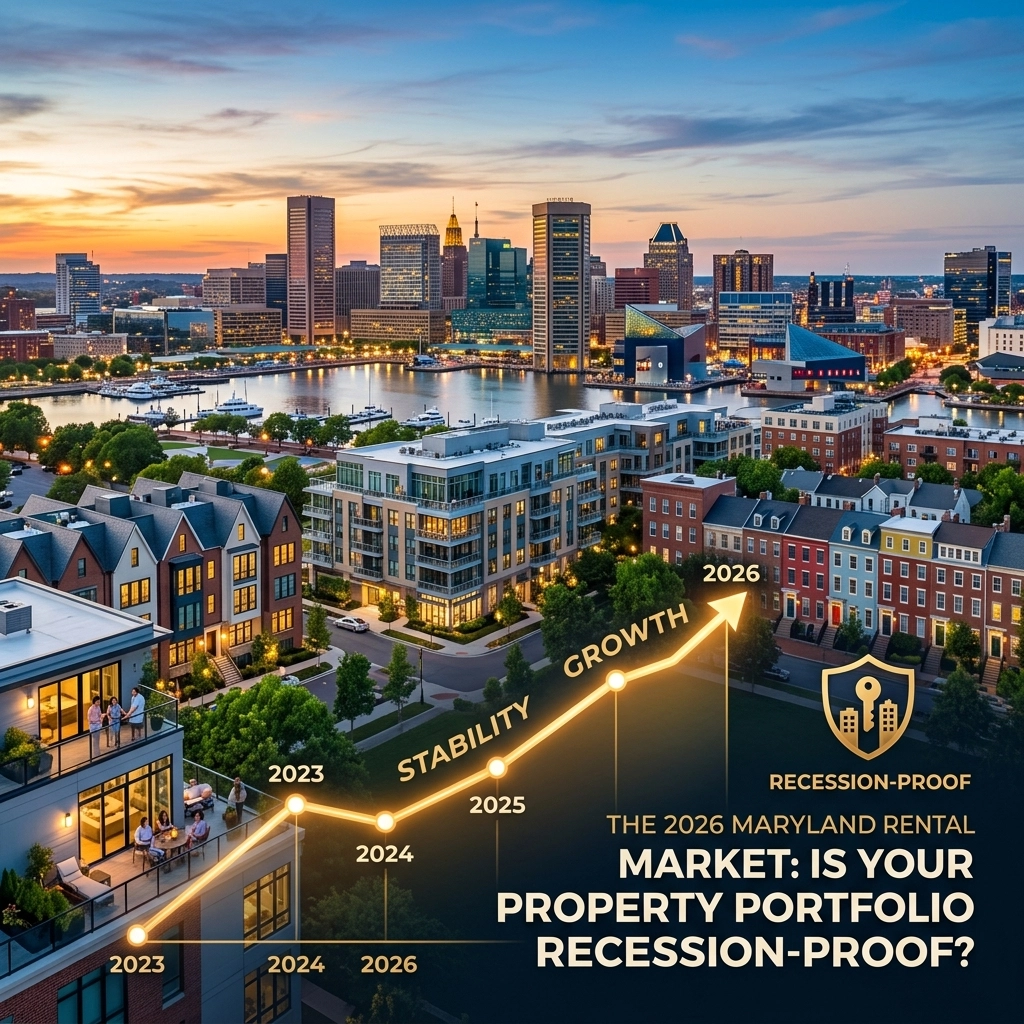
It’s May 14, 2026, and if you’re a real estate investor in Maryland, you’ve probably noticed the air feels a little different this spring. The "R-word", recession, is being tossed around the dinner table more than Maryland blue crabs. But here’s the thing: while the headlines are busy screaming about economic shifts, the actual data on the ground tells a much more nuanced story.
Is your portfolio ready to weather a storm? Or are you holding onto a house of cards? Let’s dive into the state of the Maryland rental market as it stands today, the federal tax shifts hitting your bottom line, and how you can ensure your assets stay protected.
The Baltimore Paradox: High Demand, Softening Rents
If you look at the national rankings, Baltimore is currently a rockstar. As of early 2026, Baltimore has climbed 17 spots to become the #5 city in the nation for rental property demand. We’ve seen an 81% surge in rental listings being "favorited" on major platforms. Why? Because as D.C. prices continue to push professionals further out, Baltimore’s affordability is its greatest weapon.
However, there’s a paradox at play. Despite the high demand, the average rent in Baltimore currently sits at $1,480 per month, which is about 9% lower than the national average of $1,626. Even more interesting is that we’ve seen a slight year-over-year rent decline of about 0.6% to 1.27% across the state.
What does this mean for you? It means the days of "automatic" rent hikes are over. Tenants are looking for value. If your property is in Canton, Federal Hill, or Fells Point, you still have leverage, but you have to be smarter about your positioning.

The Maryland Macro-View: May 2026 Stats
Across the state, the median home price is hovering between $430,000 and $447,000. On the surface, that looks like a strong market, but the "lock-in effect" is still very real. Inventory has dropped by 21% compared to this time last year, and new listings are down by 25%.
With mortgage rates sitting between 6.5% and 7.5%, buyers are hesitant, which should be good news for landlords. When people can’t buy, they rent. But with supply so tight and the economy showing signs of a "soft landing" (or a slow slide), the real question is whether your tenants can continue to afford the $1,811 average statewide rent if the job market takes a hit.
Federal Tax Projections and the 2026 Pivot
We can’t talk about recession-proofing without talking about Uncle Sam. 2026 is a massive pivot year for tax strategy. Many of the provisions from the 2017 Tax Cuts and Jobs Act (TCJA) are set to expire or have already been adjusted, and federal tax projections for the remainder of the year suggest higher scrutiny on passive income and capital gains.
For Maryland investors, this is a double whammy. With the state's high-income tax brackets and the discussion around local capital gains surtaxes, your "paper profit" might be much higher than the cash actually hitting your bank account.
To be truly recession-proof, you need a solid tax planning strategy. This isn't just about deductions; it's about working with a qualified CPA or tax attorney to review entity structure, depreciation timing, recordkeeping, and how rental income flows through your overall investment plan. Are you still holding properties in your personal name? Are you maximizing the depreciation schedules available in 2026? If not, you may be paying more in taxes than necessary and shrinking the cash reserves your portfolio depends on.
How to Recession-Proof Your Portfolio Right Now
A recession-proof portfolio isn't one that never loses value; it’s one that never stops producing cash flow. Here is how the pros are handling the May 2026 climate:
1. Stress Test Your Leverage
In 2021, everyone was a genius because money was free. In 2026, debt is expensive. If you have adjustable-rate mortgages (ARMs) that are resetting this year, you need a plan yesterday. A truly resilient portfolio should have a debt-coverage ratio (DCR) that can withstand a 10% vacancy spike or a 5% rent reduction without going into the red.
2. Focus on "Investor Ready" Acquisitions
If you’re still looking to grow, you can't wing it. The market is too tight for "gut feelings." This is where professional deal analysis comes in. You need to know the After Repair Value (ARV) comps, the exact rehab budgets (inflation in construction materials is still a factor in 2026), and you need a loan submission package that makes underwriters say "yes" instantly.

3. Diversify the Neighborhood, Not Just the Property
We see many investors "over-indexed" in one zip code. If that local employer moves out or the school rating drops, your entire portfolio takes a hit. Spread your risk across different Maryland sub-markets: mix the high-demand urban density of Baltimore with the stable, long-term suburban appeal of areas like Annapolis or Howard County.
Scaling with the "Investor Ready" Edge
If you’re feeling the squeeze or you’re ready to take advantage of the current market stabilization to buy more, you need more than just a real estate agent. You need a partner who understands the numbers.
This is exactly why I offer a specialized Investor Ready Funding Preparation Service. We don’t just "look at houses." We build a case for your wealth. Our package includes:
- Deep-Dive Deal Analysis: Is it actually a deal, or just a pretty house?
- ARV Comps & Market Trends: Using current May 2026 data to project future value.
- Rehab Budgets: Real-world costs so you don't get blindsided by contractors.
- Loan Submission Packages: We work through Real Brokerage lending partners to ensure your funding is secured quickly and at the best possible rates for the current climate.
You can check out our current inventory and investor resources at Millis Property or connect with me directly through Real Brokerage.
The Final Verdict: Is Maryland Safe?
The 2026 Maryland rental market is stable, but it's no longer a "set it and forget it" environment. With rents stabilizing around the $2,200 mark in many prime areas and inventory remaining at historical lows (only 2-3 months of supply), the fundamentals are strong.
However, "stable" can quickly become "stagnant" if you aren't managing your cash flow properly. Recession-proofing is a proactive sport. It requires you to look at your taxes, your debt, and your deal analysis through a cold, calculated lens.

Take the Next Step Toward Smarter Portfolio Planning
Maryland’s rental market still offers opportunity, but investors who win in this environment are the ones who stay disciplined on underwriting, financing, rehab costs, and tax planning. If you want to make better acquisition decisions, protect cash flow, and present cleaner files to lenders, professional preparation matters.
Millis Property helps investors get investor-ready with practical support that fits the current market: deal analysis, ARV comps, rehab budgets, and loan submission packages through Real Brokerage lending partners.
Ready to tighten up your next investment move?
Explore available resources and services at Millis Property or connect through Real Brokerage.
Tweet Draft for Sonny:
"Baltimore is the #5 city for rental demand in 2026, but is your portfolio actually recession-proof? 🏠📉 We’re breaking down May 2026 Maryland rental trends, tax planning considerations, and how investors can stay investor-ready. Read more: [Link] #MarylandRealEstate #InvestorReady #RentalMarket"
Schedule: Thursday, May 14, 2026.
Category: Real Estate / Investor Insights.
Leave a Reply