Author: Lamont Milbourne

  • Why Financial Literacy Will Change the Way You Manage Debt in 2026

    Why Financial Literacy Will Change the Way You Manage Debt in 2026

    As we navigate the midpoint of 2026, the financial landscape looks fundamentally different than it did just a few years ago. We are living in an era defined by high global debt volumes, shifting interest rate environments, and a massive surge in AI-driven financial tools. For many, the "old ways" of managing debt: relying on cheap refinancing or simply paying the minimums and hoping for the best: are no longer effective strategies.

    📬 Join the Inner Circle — Get weekly financial clarity insights straight to your inbox. Most people don't know what's coming. You will. Subscribe now and get the unfair advantage.

    In 2026, managing debt isn't just about moving numbers around a spreadsheet; it’s about a fundamental shift in financial literacy. Understanding the mechanics of how money works, how credit is calculated, and how to navigate a digital-first economy is becoming the ultimate competitive advantage for the average household.

    At K-Stone Enterprises, led by Lamont Milbourne, we believe that education is the first step toward financial clarity. When you understand the "why" behind your financial situation, the "how" becomes much easier to execute.

    The Reality of the 2026 Credit Landscape

    The global economic shift of the mid-2020s has brought borrowing costs to levels we haven't seen in decades. According to recent data, governments and corporations are expected to borrow nearly $29 trillion in 2026 alone: roughly double the levels seen a decade ago. What does this mean for you? It means the competition for capital is high, and the "cost of money" (interest rates) reflects that.

    In the past, many people used debt as a temporary bridge, assuming they could always refinance later at a lower rate. In 2026, "refinancing risk" is a core focus. Relying on future lower rates to solve today’s borrowing decisions is a risky move. This is why financial literacy: specifically understanding sustainability over leverage: is changing the game.

    Education allows you to look at a credit offer and see past the "low monthly payment" to the long-term impact on your cash flow.

    Understanding the Mechanics: APR, Amortization, and You

    Financial literacy isn't about becoming a math genius; it’s about understanding the basic mechanics that dictate your financial health. Two of the most critical concepts in 2026 are interest compounding and amortization.

    Infographic illustration showing the relationship between interest rates and debt reduction

    When you carry a balance on a high-interest credit card, you aren't just paying back what you borrowed; you are fighting against the "math of the banks." In 2026, as interest rates remain sticky, understanding how daily periodic rates work can be eye-opening.

    For example, a person with a high degree of financial literacy knows that:

    • APR (Annual Percentage Rate) isn't just a number; it’s a cost-of-living factor.
    • Amortization schedules on mortgages or personal loans determine how much of your payment actually goes toward the principal versus the interest.
    • Revolving credit utilization is one of the most significant levers in your credit education profile.

    When you understand these mechanics, you stop viewing debt as a "burden" and start viewing it as a "mathematical puzzle" that can be solved through strategic education and awareness.

    The Mindset Shift: From "Owing" to "Managing"

    One of the biggest changes we’ve seen in 2026 is the psychological shift in how people view their finances. In a tech-enabled world, we have more data than ever at our fingertips. But data without literacy is just noise.

    A professional person looking at a financial clarity dashboard with a sense of relief

    The true game-changer is moving from a debt-focused mindset to a cash-flow-focused mindset.

    • Debt-focused: "How can I pay this bill off today?"
    • Cash-flow-focused: "How does this obligation impact my ability to build assets, protect my family, and navigate future opportunities?"

    Financial literacy gives you the confidence to have conversations about your money without the shame or pressure that often accompanies debt. It’s about moving from a defensive posture (reacting to bills) to an offensive posture (proactively managing your financial profile).

    Interactive Check-in: Where Do You Stand?

    Before moving forward, it’s helpful to take a beat and assess your current priorities. Financial literacy starts with identifying what matters most to you right now.

    Interactive prompt asking users to rate the importance of debt elimination and keeping more of their paycheck

    Take a look at the graphic above. On a scale of 1 to 10, how important is it for you to:

    1. Keep more of your hard-earned paycheck?
    2. Gain education on debt and credit mechanics?
    3. Find safe avenues to protect what you’ve built?

    Your answer tells you exactly where your financial literacy journey needs to focus next. There is no right or wrong answer: only the next step in your own education.

    Leveraging Education and Community

    In 2026, you don't have to navigate these complex waters alone. The shift toward digital literacy and self-service tools means there are more resources available than ever, but finding the right information is key. This is why community-led education is so powerful.

    Promotional graphic for the S.I.M.P.L.E Leverage Everything online event

    Events like the "S.I.M.P.L.E Leverage Everything!" sessions (as seen above) are designed to provide a structured way to review financial information. These sessions focus on:

    • Shifting your mindset.
    • Increasing your awareness.
    • Multiplying your knowledge.
    • Protecting your assets.
    • Leveraging available resources.
    • Educating yourself on the mechanics of wealth.

    By participating in educational forums, you move from being a passive consumer of financial products to an active manager of your financial future.

    Why Financial Literacy is the Ultimate Defense

    As we look toward the rest of 2026 and into 2027, the world isn't getting any simpler. AI will continue to automate how we spend, banks will continue to innovate how they lend, and the economy will continue to cycle.

    The only variable you truly control is your level of understanding. Financial literacy is your "firewall" against predatory lending, high-interest traps, and the stress of financial uncertainty. It allows you to:

    1. Identify At-Risk Behaviors Early: Understanding the data helps you see a problem before it becomes a crisis.
    2. Make Informed Refinancing Decisions: You’ll know if "rolling over" debt actually helps or if it just kicks the can down the road.
    3. Navigate Digital Dashboards: In 2026, your "bank" is likely an app. Literacy helps you use those tools to your advantage rather than letting the algorithms dictate your spending.

    At K-Stone Enterprises, our goal is to serve as a liaison to these resources. We don't make guarantees about debt elimination or credit scores because we know that every situation is unique. However, we do guarantee that education and awareness are the most reliable paths to financial clarity.

    Ready to Review the Information?

    The landscape of 2026 demands a new approach. If you’re ready to move past the surface-level talk and really dive into how financial education can change your perspective on debt and credit, we invite you to take the next step.

    Knowledge is power, but applied knowledge is freedom.

    Want this kind of insight every week? Join the Inner Circle — it's free and it keeps you ahead of the curve.

    Want to talk it through? Call Rachel at +1 (227) 295-2046 and she'll get you connected to the right person.

    Review the information here when ready: www.mwrfinancial.com/krnrstn21

    🧵 Check out KStoneEnterprises on Etsy — unique, art-inspired apparel and creative designs that make a statement. Browse the shop here: https://kstoneenterprises.etsy.com


  • Debt Education 101: A Beginner’s Guide to Mastering Your Financial Clarity

    Debt Education 101: A Beginner’s Guide to Mastering Your Financial Clarity

    For many people, the word "debt" feels like a heavy cloud that follows them around. It’s that nagging feeling at the back of your mind when you open a credit card statement or the hesitation you feel before checking your bank balance. But here’s a perspective shift: debt isn’t just a "bill", it’s a financial tool that has been misunderstood.

    📬 Join the Inner Circle — Get weekly financial clarity insights straight to your inbox. Most people don't know what's coming. You will. Subscribe now and get the unfair advantage.

    At K-Stone Enterprises, we believe that the first step to changing your financial future isn't a "quick fix" or a magic trick; it’s education. When you understand the mechanics of how debt works, you move from being a passenger in your financial life to being the driver. This guide is designed to strip away the jargon and give you a clear, beginner-friendly framework for mastering your financial clarity.

    The Anatomy of Debt: Speaking the Language

    Before you can master your debt, you have to understand exactly what you’re looking at. Most people focus only on the "monthly payment," but that’s only one part of the story. To get true clarity, you need to look at the three core components of any debt:

    1. The Principal

    This is the "raw" amount you borrowed. If you bought a car for $20,000, that’s your principal. When you make a payment, a portion of it goes toward reducing this number, while the rest goes toward the cost of borrowing.

    2. Interest

    Interest is the "rent" you pay to use someone else’s money. It’s how lenders make a profit. Understanding that interest is an ongoing cost, not just a one-time fee, is crucial for realizing why some debts seem to never go away even when you’re paying every month.

    3. APR (Annual Percentage Rate)

    This is the most important number for your financial clarity. While "interest rate" tells you the cost of the loan, the APR includes the interest plus any fees or additional costs associated with the loan. It gives you the true, apples-to-apples cost of what you’re paying each year.

    Understanding the Different Types of Debt

    Not all debt is created equal. Knowing the "lane" your debt sits in helps you decide how to handle it.

    Secured vs. Unsecured Debt

    • Secured Debt: This is tied to an asset (collateral). For example, a mortgage is secured by your home, and an auto loan is secured by your car. If you don't pay, the lender can take the asset. Because the lender has this safety net, secured debts often have lower interest rates.
    • Unsecured Debt: This is not tied to any specific asset. Credit cards, personal loans, and student loans fall into this category. Because the lender is taking a bigger risk, these often come with much higher interest rates.

    Revolving vs. Installment Debt

    • Revolving Debt: Think of a credit card. You have a limit, you spend up to it, you pay it back, and you can spend it again. It "revolves." This is where most people get stuck because the interest can compound quickly if the balance isn't cleared.
    • Installment Debt: This is a set amount of money borrowed for a specific period (a "term"). You pay it back in fixed monthly chunks until it hits zero. Examples include car loans and mortgages.

    Hands holding a transparent chart that transitions from red/complex to green/clear, representing the journey to financial clarity.

    Good Debt vs. Bad Debt: A New Perspective

    In the world of financial education, we often talk about the "quality" of debt. While no one wants to be in debt, some forms of borrowing can actually move you forward.

    • "Good" Debt: This is debt used to acquire an asset that has the potential to increase in value or generate income. A mortgage on a home in a growing Maryland market or a student loan for a high-demand career field are traditional examples. These are investments in your future self.
    • "Bad" Debt: This is borrowing for things that lose value the moment you buy them or for lifestyle expenses you can't currently afford. High-interest credit card debt used for dining out, clothes, or vacations is the primary culprit here. It drains your future income without providing a long-term return.

    The 4-Step Framework for Financial Clarity

    Gaining clarity doesn't happen by accident. It requires a deliberate process. If you're feeling overwhelmed, follow this simple framework to organize your thoughts and your numbers.

    Step 1: The Full Reveal

    You can't fix what you won't face. Take a piece of paper or open a spreadsheet and list every single debt you owe. Don't leave anything out. For each one, write down:

    • The Name of the Lender
    • The Total Balance Remaining
    • The APR (Interest Rate)
    • The Minimum Monthly Payment

    Step 2: Calculating the Real Cost

    Look at your highest interest rate debt. If you have a credit card with a $5,000 balance at a 24% APR, you are paying roughly $100 a month just in interest, before you even touch the principal. Realizing the "cost of waiting" is often the spark people need to get serious about their education.

    Step 3: Choosing a Strategy (Snowball vs. Avalanche)

    Once you have your list, you need a method to attack it. Two of the most common educational frameworks are the Debt Snowball and the Debt Avalanche.

    • The Debt Snowball: You focus on paying off the smallest balance first while paying minimums on everything else. Once the smallest is gone, you roll that payment into the next smallest. This is great for psychological "wins" and keeping you motivated.
    • The Debt Avalanche: You focus on the debt with the highest interest rate first. Mathematically, this saves you the most money over time because you're eliminating the most expensive debt first.

    A conceptual illustration comparing the Debt Snowball and Debt Avalanche methods.

    Step 4: Building the Bridge

    Now that you have your list and your strategy, look at your monthly income. Where can you find extra "seed money" to put toward your chosen strategy? This might come from tax awareness, bill negotiation, or simply reorganizing your spending. The goal isn't to live a life of restriction, but to build a bridge from where you are to where you want to be.

    Why Education is the First Step

    Many people jump straight into "consolidation" or "settlement" without ever learning the habits that got them into debt in the first place. This is like trying to bail water out of a boat without plugging the hole.

    Debt education is about plugging the hole. It’s about understanding tax awareness so you keep more of your paycheck. It’s about credit education so you can qualify for lower rates in the future. It’s about having the clarity to know exactly where every dollar is going.

    When you have clarity, the fear disappears. You stop wondering "if" you'll get ahead and start knowing "when."

    A bridge connecting a foggy side representing financial confusion to a bright, sunlit side representing financial empowerment.

    Take the Next Step Toward Clarity

    Financial education is a journey, not a destination. You don't have to have all the answers today, you just need to be willing to review the information and see what's possible for your family.

    At K-Stone Enterprises, we are committed to providing the resources and information you need to make empowered decisions. Whether you're looking to improve your credit, understand your taxes better, or find a clear path through your debt, the first step is simply getting the right information in your hands.

    Motivational finance prompt graphic asking users to rate the importance of eliminating debt.

    Want this kind of insight every week? Join the Inner Circle — it's free and it keeps you ahead of the curve.

    Want to talk it through? Call Rachel at +1 (227) 295-2046 and she'll get you connected to the right person.

    Review the information here when ready: www.mwrfinancial.com/krnrstn21


    Tweet Draft:
    "Debt isn't just a bill, it's a financial tool that's often misunderstood. 📉 Mastering your financial clarity starts with education, not just payments. Check out our beginner's guide to Debt Education 101! #FinancialClarity #DebtEducation #KStoneEnterprises"

    Note: Sonny, please schedule this for our next MWR-focused slot.

    🧵 Check out KStoneEnterprises on Etsy — unique, art-inspired apparel and creative designs that make a statement. Browse the shop here: https://kstoneenterprises.etsy.com



  • Looking For Off-Market Property in Maryland? Here Are 10 Things You Should Know

    Looking For Off-Market Property in Maryland? Here Are 10 Things You Should Know


    SEO Notes (Penny SEO Layer v1):

    • Business Lane: Real Estate
    • Target Reader: Maryland homebuyers looking for off-market properties
    • Main Keyword: off-market property Maryland
    • Related Keywords: Maryland real estate, pocket listings, driving for dollars, SDAT records, home buyer tips
    • Suggested SEO Title: Looking For Off-Market Property in Maryland? Here Are 10 Things You Should Know
    • Suggested Meta Description: Discover the top 10 things you need to know about finding off-market property in Maryland. Learn how to uncover hidden inventory in 2026.
    • Suggested URL Slug: off-market-property-maryland-guide
    • Suggested Image Alt Text: Maryland suburban neighborhood with real estate map on digital tablet
    • Internal Link Suggestions: Link to Maryland home buyer checklist
    • External Link Suggestions: Link to Foreclosure.com, Maryland SDAT records
    • CTA: Send property address or basic details for next steps | Call Rachel: +1 (227) 295-2046
    • Risk Level: Low
    • Linda Review Needed: No
    • Repurpose Notes for Sonny: Create a LinkedIn carousel on "5 Ways to Find Off-Market Properties in Maryland" and an Instagram Reel script.

    If you’ve been watching the Maryland real estate market lately, you know the score. Inventory is tight, competition is fierce, and the best homes often feel like they’re gone before the "For Sale" sign even hits the lawn. In 2026, the statewide supply is hovering around two to three months of inventory, which keeps things tilted in favor of sellers even as the market finds its rhythm.

    But what if I told you that the houses you see on popular search portals are only part of the story?

    📬 Join the Inner Circle — Get weekly Maryland market updates straight to your inbox. Most buyers don't know what's coming. You will. Subscribe now and get the unfair advantage.

    There is a whole world of "off-market" properties: homes that aren't officially listed on the Multiple Listing Service (MLS). For buyers and investors in Maryland, finding these "hidden" opportunities can be the key to avoiding bidding wars and finding a property that fits your specific needs.

    As a U.S. Army veteran and a licensed real estate professional with The Real Brokerage LLC, I’ve seen how the right information can change the game for my clients. At K-Stone Enterprises, we believe in education first. Here are 10 things you should know about finding off-market properties in the Old Line State.

    1. Understand the 2026 Maryland Landscape

    Before you start hunting, you need to know what you’re up against. Currently, homes in Maryland that do hit the open market are sitting for an average of 35 to 60 days. While this is a bit longer than the "blink-and-you-miss-it" pace of a few years ago, the lack of new listings means buyers are still feeling the squeeze.

    Off-market properties (sometimes called "pocket listings" or "quiet listings") are becoming a vital alternative. These properties offer a way to navigate a market where public inventory is thin but demand remains steady. Understanding that the market is "balanced but tight" helps you approach off-market deals with the right level of urgency and patience.

    2. The Power of Agent and Investor Relationships

    One of the most effective ways to find an off-market deal is through the "who you know" method. Many experienced real estate agents have "pocket listings": properties where the seller wants privacy or isn't quite ready for a full public launch.

    Building a relationship with a local professional who understands the Maryland suburbs: from the historic streets of Baltimore to the expanding communities in Frederick: can give you a massive head start. Investors also play a huge role here. Networking with local wholesalers and property flippers can lead to "assignment deals" or "pre-rehab" opportunities that never see the light of day on a public website.

    A real estate expert and client discussing property opportunities over coffee

    3. Mastering Direct-to-Owner Outreach

    Sometimes, the best way to find a house is to simply ask. Direct-to-owner outreach involves identifying a neighborhood you love and reaching out to homeowners directly. This isn't about high-pressure sales; it's about letting people know you are a serious buyer looking for a home in their specific area.

    A simple, handwritten note or a professional letter can go a long way. Many owners might be thinking about selling but are overwhelmed by the thought of cleaning, staging, and listing their home. Knowing there is a local buyer ready to have a conversation can be exactly what they need to take the next step.

    4. "Driving for Dollars" in Your Favorite Neighborhoods

    This is a classic strategy that still works wonders in 2026. "Driving for dollars" means exactly what it sounds like: getting in your car and driving through Maryland neighborhoods to look for signs of a property that might be available soon.

    What are you looking for? Signs of "latent" interest. Maybe a yard is a bit overgrown, the paint is peeling, or there's a stack of newspapers on the porch. These aren't necessarily "distressed" properties, but they might indicate an owner who is ready for a change. Tools like mobile apps can help you tag these properties on a map and find the owner’s mailing address instantly.

    A professional person taking a photo of a suburban house for research

    5. Digging Into County Records and SDAT

    Maryland offers some great public resources for the savvy researcher. The Maryland State Department of Assessments and Taxation (SDAT) is a goldmine. You can look up ownership information, tax assessments, and the last sale date for any property in the state.

    Investors often look for "absentee owners": people who own a property but don't live in it. These owners might be more open to an off-market offer, especially if they are tired of managing a rental or an inherited property. Systematic research into these public records is a foundational skill for anyone looking to find "hidden" inventory.

    6. Networking at Local REIA Meetings

    The Real Estate Investor Association (REIA) meetings are where the local pros gather. Maryland has several active groups, including those focused on the Baltimore and DC metro areas.

    Attending these meetings allows you to hear about "coming soon" deals from other investors, wholesalers, and contractors. It’s also a great place to learn about the specific nuances of Maryland property laws and market trends. Even if you aren't an investor, the information shared in these rooms is incredibly valuable for any serious buyer.

    7. Using Online Off-Market Platforms

    While we focus on "off-market," there are digital platforms specifically designed to aggregate these types of leads. Websites that focus on pre-foreclosures, tax liens, or bank-owned (REO) properties can give you a list of potential opportunities before they are fully marketed.

    Platforms like Foreclosure.com or local auction sites often feature Maryland properties that are in various stages of the selling process. Just remember, these properties often come with unique requirements, so having a professional by your side to help navigate the information is key.

    A laptop screen displaying property data maps and spreadsheets for research

    8. Navigating Complex Situations (Probate and Divorce)

    Properties often become available off-market due to life changes like probate, divorce, or estate settlements. These can be sensitive situations that require a high level of professionalism and empathy.

    In these cases, the owners are often looking for a smooth, quiet transaction. While these deals can offer great opportunities, they also involve legal complexities. It is essential to work with professionals: including your own legal counsel: to ensure that everything is handled correctly. We focus on providing the information you need to understand the process, but we always recommend consulting a qualified attorney for legal advice on these specific matters.

    9. Identifying Vacant-Looking Properties

    A vacant property is often a sign of an owner who is "in-between" decisions. In Maryland, you’ll find these everywhere from the city to the rural counties. Identifying these properties early can be a great way to find a deal before anyone else does.

    Keep an eye out for signs like boarded-up windows, lack of window treatments, or utilities being turned off. Once you identify a property that looks vacant, your next step is to use those public records we talked about (SDAT) to find out who the owner is and start a conversation.

    An older but well-kept brick house with a Coming Soon sign

    10. Creative Community Approaches

    Finally, think outside the box. Who else is in these neighborhoods every day? Mail carriers, contractors, and local utility workers often see which houses are being cleaned out or which owners are preparing to move long before a sign goes up.

    Building a network in the community means people might give you a "heads up" when they see a house that might be coming on the market. It’s about being an active part of the Maryland community and letting people know you’re looking to invest in the area’s future.

    Moving Forward with Confidence

    Finding an off-market property in Maryland requires a mix of research, relationship-building, and persistence. Whether you are looking for your next family home or an investment opportunity, the "hidden" market offers a path to success that the MLS simply can't match.

    At K-Stone Enterprises, we are committed to helping you navigate these options. If you’re ready to learn more about the Maryland market or want to see how these strategies could work for you, let’s start a conversation.

    Want this kind of insight every week? Join the Inner Circle — it's free and it keeps you ahead of the curve in the MD market.

    Want to talk it through? Call Rachel at +1 (227) 295-2046 and she'll get you connected to the right person.

    Reply INFO and I’ll send the next step.

    🧵 Check out KStoneEnterprises on Etsy — unique, art-inspired apparel and creative designs that make a statement. Browse the shop here: https://kstoneenterprises.etsy.com

  • How to Integrate Tax Awareness With Your Wealth Building Strategy

    How to Integrate Tax Awareness With Your Wealth Building Strategy


    SEO Notes (Penny SEO Layer v1):

    • Business Lane: MWR Financial
    • Target Reader: Individuals looking to understand tax awareness and financial literacy
    • Main Keyword: tax awareness wealth building
    • Related Keywords: tax brackets, deductions and credits, asset location, financial literacy
    • Suggested SEO Title: How to Integrate Tax Awareness With Your Wealth Building Strategy
    • Suggested Meta Description: Discover how integrating tax awareness into your wealth building strategy can help you keep more of what you earn. Learn about marginal brackets, deductions, and asset location.
    • Suggested URL Slug: tax-awareness-wealth-building-strategy
    • Suggested Image Alt Text: Professional financial workspace with growth charts and city skyline view
    • Internal Link Suggestions: Link to MWR financial education pillar pages
    • External Link Suggestions: Link to IRS retirement plans, Tax Foundation
    • CTA: Review the information here when ready: www.mwrfinancial.com/krnrstn21 | Call Rachel: +1 (227) 295-2046
    • Risk Level: Low
    • Linda Review Needed: No
    • Repurpose Notes for Sonny: Create an Instagram graphic highlighting the 3 pillars of wealth and a Twitter/X thread on marginal vs. effective tax brackets.

    Most people think about wealth building in two categories: making more money and investing it wisely. While those are the pillars of financial growth, there is an invisible third pillar that often determines how fast you actually cross the finish line.

    That pillar is Tax Awareness.

    It is a common misconception that taxes are just something you deal with once a year in April. In reality, the way you earn, spend, and invest money throughout the year has a direct impact on how much of your hard-earned wealth actually stays in your pocket. According to a 2023 study, insufficient financial literacy in the U.S. costs adults an average of over $1,500 per year in lost wealth and mistakes. When you multiply that over a 30-year career, that “literacy tax” can cost you hundreds of thousands of dollars in potential compound growth.

    At K-Stone Enterprises, we believe that education is the first step toward financial clarity. Understanding how to integrate tax awareness into your wealth strategy isn't about finding "loopholes"; it’s about understanding the rules of the game so you can play it effectively.

    📬 Join the Inner Circle — Get weekly financial clarity insights straight to your inbox. Most people don't know what's coming. You will. Subscribe now and get the unfair advantage.

    🗳️ Poll: How aware are you of how taxes affect your wealth?

    No judgment — just curious where you're at!

    A) Very aware — I actively plan around taxes
    B) Somewhat aware — I know I should pay more attention
    C) Not really — I just file and hope for the best
    D) Wait… taxes can help build wealth?

    The Invisible Leak: Understanding Tax Drag

    Imagine you are filling a bucket with water. Your income and investment returns are the water pouring in. "Tax drag" represents the small holes at the bottom of the bucket. No matter how much water you pour in, if the holes are large enough, the bucket will never stay full.

    Tax awareness is the process of identifying those holes and using the tools available to you to patch them. When you minimize the amount of wealth lost to unnecessary taxes, you increase your "net return": the only number that truly matters for your long-term goals.

    Conceptual glass jar with gold coins and a growing plant representing wealth protection

    1. Know Your Numbers: Marginal vs. Effective Brackets

    One of the biggest hurdles to tax awareness is a misunderstanding of how tax brackets work. Many people fear that getting a raise will "push them into a higher bracket" and actually result in less money take-home.

    In the U.S., we have a progressive tax system. This means your income is taxed in "chunks" at different rates. If you move into a higher bracket, only the dollars in that specific chunk are taxed at the higher rate, not your entire income.

    Why this matters for your strategy:

    • Effective Tax Rate: This is the actual percentage of your total income that goes to the IRS after all chunks are calculated.
    • Marginal Tax Rate: This is the rate applied to the next dollar you earn.

    Understanding your marginal rate helps you make better decisions about whether to put more money into a tax-deferred account (like a traditional 401k) or a tax-free account (like a Roth IRA). If your marginal rate is high today, you might prioritize a deduction now to keep more of those top-tier dollars.

    2. The Power of Deductions and Credits

    Tax awareness also means understanding the difference between a deduction and a credit. Both are valuable, but they work differently in your wealth-building engine.

    • Deductions: These lower your taxable income. If you earn $100,000 and have $10,000 in deductions, the IRS only taxes you as if you earned $90,000. For small business owners and independent contractors, understanding the hundreds of potential deductions available is a core part of maintaining cash flow.
    • Credits: These are even more powerful because they are a dollar-for-dollar reduction of your tax bill. If you owe $5,000 in taxes but have a $2,000 credit, your bill drops to $3,000.

    Missing out on eligible credits: like the Earned Income Tax Credit or education-related credits: is essentially leaving your own money on the table.

    Motivational graphic asking about the importance of keeping more of your paycheck

    3. Asset Location: Where You Put Your Money Matters

    Wealth building often involves different types of accounts: brokerage accounts, retirement accounts, and savings. Tax-aware individuals practice "Asset Location," which is the strategy of placing certain investments in specific accounts based on how they are taxed.

    For example, some investments generate "ordinary income" (like bond interest), which is usually taxed at higher rates. Putting those inside a tax-advantaged account like a 401(k) or IRA can help shield that income from immediate taxation. Meanwhile, investments that grow over the long term might be better suited for a standard brokerage account where they can benefit from lower long-term capital gains rates.

    4. The "Timing" Strategy: Long-Term vs. Short-Term

    Timing is everything in wealth building, especially when it comes to capital gains.

    • Short-Term Capital Gains: If you sell an investment you’ve held for less than a year, the profit is taxed at your ordinary income rate (which can be quite high).
    • Long-Term Capital Gains: If you hold that same investment for more than a year, the tax rate on the profit is often significantly lower (0%, 15%, or 20% for most people).

    By simply being aware of the calendar, you can make decisions that significantly impact your after-tax returns. This is why many successful investors aim for a "buy and hold" strategy: it’s not just about market stability; it’s about tax efficiency.

    Man promoting MWR Financial and home-based tax deductions

    5. Using the Tax Code as a Roadmap

    It is often said that the Internal Revenue Code is less of a "bill" and more of a "roadmap." Much of the code is written to encourage certain behaviors: like starting a business, investing for retirement, or providing housing.

    When you align your wealth-building activities with these incentives, you aren't just following the law; you are using the system exactly as it was designed. This is why business owners often have more flexibility in their wealth strategy. They can leverage deductions for home offices, travel, and equipment that employees typically cannot.

    6. Integrating Awareness into Your Daily Life

    You don't need to be a CPA to be tax-aware. You just need to start asking the right questions before you make major financial moves:

    • "How will this purchase affect my taxable income?"
    • "Is there a tax-advantaged way to save for this goal (like an HSA or 529 plan)?"
    • "If I sell this asset now versus six months from now, what is the tax difference?"

    Education is the bridge between where you are and where you want to be. While Lamont Milbourne and K-Stone Enterprises do not provide legal, tax, or investment advice, we serve as a liaison to resources and memberships that focus on financial education, credit clarity, and debt awareness.

    Diverse group of people in an educational workshop setting

    Final Thoughts

    Wealth building is a marathon, not a sprint. If you only look at your finances through the lens of "how much did I make this month," you are only seeing half the picture. By integrating tax awareness, you start to see the full landscape of your financial future.

    You work hard for your money. It only makes sense to be aware of the tools and strategies that help you keep more of it, grow it faster, and protect it for the long haul.

    📬 Want this kind of insight every week? Join the Inner Circle — it's free and it keeps you ahead of the curve.

    Want to talk it through? Call Rachel at +1 (227) 295-2046 and she'll get you connected to the right person.

    Want me to send you the information so you can review how it works?


    🧵 Check out KStoneEnterprises on Etsy — unique, art-inspired apparel and creative designs that make a statement. Browse the shop here: https://kstoneenterprises.etsy.com

  • 7 Mistakes You’re Making with Your Maryland Property Listing (and How to Fix Them)

    7 Mistakes You’re Making with Your Maryland Property Listing (and How to Fix Them)

    Selling a home in Maryland in 2026 isn't the same as it was a few years ago. While we are still seeing a competitive market with a median sale price hovering around $410,000 to $448,407, the days of simply sticking a sign in the yard and waiting for a bidding war are largely over.

    📬 Join the Inner Circle — Get weekly Maryland market updates straight to your inbox. Most sellers don't know what's coming. You will. Subscribe now and get the unfair advantage.

    With inventory slowly climbing, up over 12% compared to last year, and roughly 3 months of supply available, Maryland buyers have more choices than they’ve had in a long time. This means that if your listing isn't polished, you aren't just losing time; you're likely losing money. In fact, recent data shows that nearly 40% of Maryland sales are closing under the list price, and about 20% of listings are seeing price drops before they ever reach the closing table.

    At K-Stone Enterprises, led by Lamont Milbourne, we see these mistakes happen every day. Whether you’re selling a townhouse in Baltimore, a colonial in Prince George’s County, or an investment property in Montgomery County, avoiding these seven common pitfalls can be the difference between a "Sold" sign and a stale listing.


    1. The "Aspiration Price" Trap (Overpricing)

    The most common mistake sellers make is pricing their home based on what they want to get rather than what the market will actually pay. Many homeowners look at a neighbor’s house that sold for a record high in 2024 and assume their home is worth even more today.

    However, in 2026, Maryland's price growth has moderated to a steady 0.5% to 2.4% year-over-year. When you price your home even 5% above market value, you miss the initial "honeymoon phase" of a listing. Statistics show that homes in Maryland are going pending in a median of just 10 days if they are priced correctly. If you overshoot, you risk becoming part of the 43-day median group, or worse, the group that has to slash prices later.

    How to Fix It: Don't rely solely on automated online estimates. Work with a licensed Maryland real estate professional like Lamont Milbourne to review a Comprehensive Market Analysis (CMA). Look at "Sold" comps from the last 90 days, not active listings, to see what buyers are actually pulling the trigger on.

    2. DIY Cell Phone Photos (Poor Photography)

    We live in a "scroll-first" society. Your home’s first showing isn't at the open house; it’s on a buyer’s smartphone at 11:00 PM. Using grainy, poorly lit, or cluttered photos taken with a cell phone is a guaranteed way to get skipped.

    Comparison of professional vs amateur real estate photography

    Buyers associate the quality of the photos with the quality of the home's maintenance. If the photos are dark and blurry, they assume the HVAC is old and the roof is leaking. Professional photography can make a space look larger, brighter, and more inviting, highlighting the actual value of your property.

    How to Fix It: Always invest in professional real estate photography. High-end listings should even consider drone shots and 3D walkthroughs. You can see examples of how professional presentation makes a difference at Millis Property.

    3. The "Invisible" Front Porch (Ignoring Curb Appeal)

    You only get one chance to make a first impression. In Maryland, where we value our seasonal curb appeal, a patchy lawn or a dirty front door can kill a deal before the buyer even gets out of their car. Many sellers focus so much on the kitchen renovation that they forget the exterior is what gets people through the door.

    Close-up of high curb appeal front entrance

    How to Fix It: You don't need a massive landscaping budget. Small changes like power-washing the siding, painting the front door a welcoming color (like navy or classic black), and adding fresh mulch can transform the look of your home. Ensure your house numbers are visible and polished, it signals that the home is well-cared for.

    4. Staging for You, Not for Them (Bad Staging)

    Your home is your sanctuary, filled with memories and personal style. But when you list your property, it’s no longer a home, it’s a product. One of the biggest mistakes is failing to "de-personalize." If a buyer walks into a living room filled with family photos and eclectic decor, they spend their time looking at your life instead of imagining their own.

    Clean, neutral, professionally staged living room

    How to Fix It: Think "neutral and airy." Remove 50% of your items from closets (to make them look bigger) and stick to a neutral color palette. The goal is to create a "hotel-ready" feel that appeals to the widest possible range of Maryland buyers.

    5. Playing Hard to Get (Limited Showing Access)

    In a market where buyers have more options, being difficult to schedule with is a deal-killer. If a buyer is in town for a weekend to see five houses and you tell them you "can't do Sundays" or "need 24-hour notice," they will simply move on to the next house on their list.

    Real estate sign with electronic lockbox

    How to Fix It: While it's inconvenient to live in a "showing-ready" state, the first two weeks are critical. Use a professional electronic lockbox that allows for secure, tracked access and try to say "yes" to every showing request possible. The more feet that walk across your floors, the higher your chances of a strong offer.

    6. Not Understanding Buyer Financing

    Not all offers are created equal. A common mistake is looking only at the "top-line price" without understanding the financing behind it. In Maryland, we have a significant number of military buyers using VA loans, as well as first-time buyers using FHA or Maryland Mortgage Program (MMP) assistance.

    Each of these loan types has different appraisal requirements. For example, a VA appraiser might flag peeling paint or a missing handrail that a conventional appraiser might ignore. If you don't understand these nuances, your deal could fall apart during the inspection or appraisal phase.

    How to Fix It: Review the "Proof of Funds" or "Pre-Approval" letter for every offer. Make sure your agent explains the difference between a Conventional 20% down offer and an FHA 3.5% down offer. Understanding the buyer's "ability to perform" is just as important as the price they offer. You can learn more about how we review these details at Lamont’s real estate page.

    7. Selling Your "Memories" (Emotional Decision-Making)

    Selling a home is emotional. You raised your kids there or put your blood, sweat, and tears into the renovations. However, getting offended by a "low-ball" offer or refusing to negotiate on a small repair can cost you the sale. When you treat the transaction personally, you lose the leverage needed for a successful business negotiation.

    How to Fix It: Step back and look at the data. Remember that about 33% of Maryland homes are selling above list price, but nearly 20% are seeing price drops. If your home has been on the market for 30 days without an offer, the market is telling you something. Listen to the feedback from showings and use it to adjust your strategy objectively.


    Moving Toward the Next Step

    The Maryland real estate market in 2026 is full of opportunity, but it demands a strategic approach. Avoiding these seven mistakes won't just save you stress; it will help you position your property to stand out in a sea of listings.

    Lamont Milbourne and K-Stone Enterprises are here to help you navigate these hurdles, providing the clarity and local Maryland expertise you need to move forward with confidence.

    Want this kind of insight every week? Join the Inner Circle — it's free and it keeps you ahead of the curve in the MD market.

    Reply INFO and I'll send the next step.


    Tweet Draft for Sonny:
    📢 Selling your MD home in 2026? Don't leave money on the table! 🏠 We've broken down the 7 biggest mistakes Maryland sellers are making right now: from pricing traps to the "invisible" front porch. Read the full guide here: [Link] #MarylandRealEstate #HomeSellingTips #KStoneEnterprises

    🧵 Check out Twisted Emotions (Threaded Creations KLM) on Etsy — unique, handcrafted apparel that lets you wear your story. Browse the shop here: https://threadedcreationsklm.etsy.com

  • The Simple Trick to Improve Your Monthly Bill Negotiations Right Now

    The Simple Trick to Improve Your Monthly Bill Negotiations Right Now

    Let’s be honest: nobody wakes up excited to look at their monthly bills. Between the cell phone plan, high-speed internet, cable or streaming services, and home security, it often feels like your bank account has a slow leak. Most of us just set these things to "autopay" and try to forget about them.

    📬 Join the Inner Circle — Get weekly financial clarity insights straight to your inbox. Most people don't know what's coming. You will. Subscribe now and get the unfair advantage.

    But there is a "loyalty tax" that many Maryland families are paying without even realizing it. Companies often reserve their best rates for new customers, while long-term, loyal customers are quietly bumped up to higher price tiers as "promotional periods" expire.

    In 2026, the cost of living hasn't exactly slowed down. Residential electricity is projected to hit around 18 cents per kWh, a nearly 37% jump from just a few years ago. With those kinds of increases in utilities, finding ways to trim the fat from your other monthly subscriptions isn’t just a good idea; it’s a necessity for maintaining financial clarity.

    The good news? You have more leverage than you think. There is one simple trick that can shift the power back into your hands, and it doesn't involve being rude or spending hours on hold.

    The Reality of the "Hidden" Bill Costs

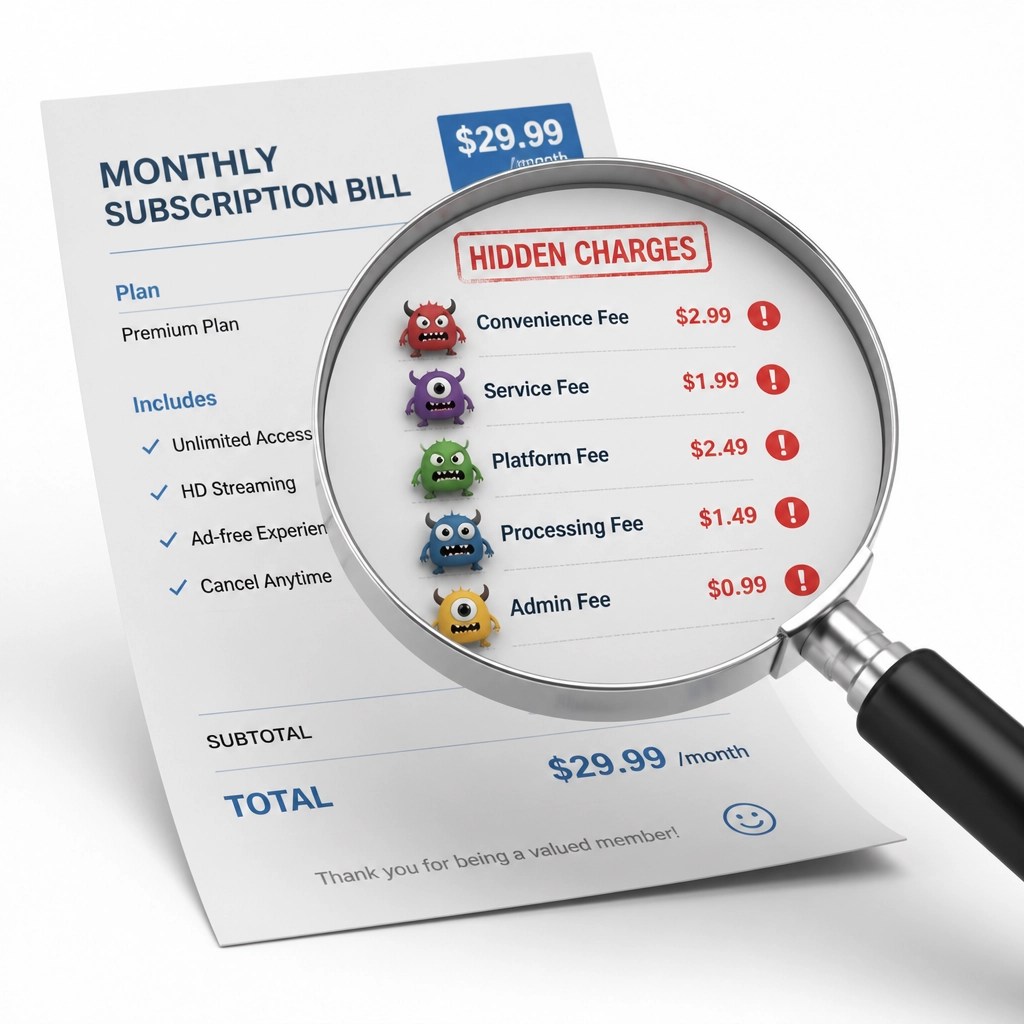
    Before we get to the trick, we need to talk about what’s actually on those statements. Research shows that the average cable bill alone can hide nearly $450 per year in "surprise fees." These aren't the services you signed up for; they are administrative fees, regional sports surcharges, and equipment rentals that slowly creep up.

    When you add in your cell phone and internet, most households are sitting on a potential goldmine of savings. In fact, households that actively negotiate these bills in 2026 typically see a 15–25% reduction per bill. For a single successful negotiation on a wireless or internet bill, that can translate to $300–$800 in annual savings.

    An illustration representing the power of financial choice and organized bills.

    The "Simple Trick": The Competitor Leverage Strategy

    Many people fail at bill negotiation because they call and say, "Hi, my bill is too high. Can you give me a discount?"

    The customer service representative (CSR) is trained to say "no" or offer a tiny $5 credit to get you off the phone.

    The simple trick is this: Never call without a specific competitor’s offer in your hand and the intent to reach the "Retention Department."

    Companies spend hundreds of dollars in marketing to acquire one new customer. They do not want to lose you. But the front-line customer service agents often don't have the authority to give you the deepest discounts. The "Retention" or "Loyalty" department does.

    How to Execute the Trick:

    1. Do 5 Minutes of Homework: Before you call, look up the "new customer" offer from a rival provider in your area. For example, if you have Xfinity, look up what Verizon Fios or T-Mobile Home Internet is offering.
    2. Use the Magic Words: When the automated system asks why you’re calling, say "Cancel Service." This is the fastest way to get routed to a person who actually has the power to lower your rate.
    3. The Script: Once you’re talking to a Retention Specialist, be polite but firm. Use this script:

      "Hi, I've been a loyal customer for [X] years, but I just saw that [Competitor Name] is offering a similar plan for $[Lower Price]. I'm considering switching today unless you can match that rate or offer me a better incentive to stay."

    This simple pivot: from "asking for a favor" to "presenting a competitive ultimatum": completely changes the dynamic of the conversation.

    Why This Matters for Your "Financial Makeover"

    At K-Stone Enterprises, we believe in empowering our community with the tools to create financial clarity. Negotiating a bill isn't just about saving twenty bucks a month; it's about the cumulative power of that money over time.

    If you negotiate three major telecom bills and save an average of $500 per year on each, you’ve just found $1,500 in annual cash flow. That’s money that can be redirected toward debt education, building an emergency fund, or simply giving your family more breathing room.

    A confident person successfully negotiating their bills over the phone.

    Common Bills You Can Negotiate Right Now

    You might be surprised at how many "fixed" costs are actually flexible. Here are the top categories where Maryland residents are seeing the most success:

    • Cell Phone Plans: Ask about "unadvertised" loyalty plans or discounts for autopay and paperless billing (which can save up to $10 per month per line).
    • High-Speed Internet: With 5G home internet becoming a major competitor to traditional cable, providers are more desperate than ever to keep their fiber and coaxial customers.
    • Home Security: If your contract is up, many companies will lower your monthly monitoring fee just to keep you from switching to a DIY system like Ring or SimpliSafe.
    • Satellite Radio & Streaming: These are some of the easiest wins. Most satellite radio providers will drop their price by 50% or more the moment you mention cancelling.

    Watch Out for the "Hidden Fee" Trap

    As you negotiate, keep a close eye on those "administrative fees." Sometimes, a provider will offer you a lower "base rate" but then increase the equipment rental fee for your modem or router.

    One of the best ways to combat this is to buy your own equipment. If you’re paying $15/month to rent a router, that’s $180 a year for a device you could buy once for $100. Over three years, that's nearly $450 back in your pocket.

    A magnifying glass revealing hidden fees and surprise costs on a bill.

    Moving Toward Financial Empowerment

    Bill negotiation is just one piece of the puzzle. It’s about shifting your mindset from being a passive consumer to being an active manager of your resources. When you understand how these systems work, you stop feeling like a victim of "rising costs" and start feeling like the person in the driver's seat.

    We often talk about "leveraging everything." This means using every tool, every piece of information, and every available resource to improve your financial outlook. Whether it's through credit education, debt awareness, or simply learning how to talk to a service provider, the goal is always the same: Clarity and Understanding.

    If you’re ready to see how a structured approach to your finances can help you identify more opportunities like this, we have resources available to help you review the possibilities.

    S.I.M.P.L.E Leverage Everything! Weekly Event Promotional Graphic

    Next Steps for You:

    1. Pick one bill today. Just one.
    2. Find a competitor's price.
    3. Call and ask for the Retention Department.

    You might be surprised at how much "found money" is waiting for you just by having a ten-minute conversation.

    Want this kind of insight every week? Join the Inner Circle — it's free and it keeps you ahead of the curve.

    Review the information here when ready: www.mwrfinancial.com/krnrstn21

    Want me to send you the information so you can review how it works?


    Twitter Draft for Sonny:
    Stop paying the "loyalty tax"! 🛑 Maryland households are saving $300-$800/year per bill just by using one simple negotiation trick. Ready to find some "found money"? Check out our latest guide on mastering your monthly bills. 💸 #FinancialClarity #KStoneEnterprises #BillNegotiation https://www.mwrfinancial.com/krnrstn21

    🧵 Check out Twisted Emotions (Threaded Creations KLM) on Etsy — unique, handcrafted apparel that lets you wear your story. Browse the shop here: https://threadedcreationsklm.etsy.com

  • Financial Education 101: A Beginner’s Guide to Mastering Your Credit Awareness

    Financial Education 101: A Beginner’s Guide to Mastering Your Credit Awareness

    When it comes to your financial journey, there is one number that often feels like a mysterious gatekeeper: your credit score. For many, credit is a source of stress, confusion, or even fear. But here at K-Stone Enterprises, we believe that fear is usually just a lack of information. When you move with understanding, that fear turns into clarity, and clarity leads to smarter decisions.

    📬 Join the Inner Circle — Get weekly credit and financial clarity insights straight to your inbox. Most people don't know what's coming. You will. Subscribe now and get the unfair advantage.

    Financial education isn't about finding a "magic fix" or overnight "repair." It’s about building a foundation of awareness. Whether you are looking to buy a home in Maryland, start a business, or simply lower your monthly expenses, understanding how the credit system works in 2026 is the first step toward true financial empowerment.

    This guide is designed to strip away the jargon and give you the fundamental building blocks of credit awareness. We aren't here to guarantee scores or promise quick results: we are here to provide the education you need to navigate the financial landscape with confidence.

    What Exactly is a Credit Score?

    Think of your credit score as a financial "shorthand." It is a three-digit number, typically ranging from 300 to 850, that summarizes the information in your credit reports. Lenders, landlords, and even some employers use this number to get a snapshot of how you’ve handled borrowed money in the past.

    In 2026, the most common scoring model remains the FICO Score, used by approximately 90% of top lenders. While there are other models, like VantageScore, the goal is always the same: to estimate the likelihood that you will repay a loan on time.

    A score around 670–700 is generally considered "good," while anything over 800 is considered "excellent." Most Americans fall somewhere between 600 and 750. Understanding where you sit on this scale is the starting point, but understanding why you are there is where the real power lies.

    The 5 Pillars of Credit Awareness

    To truly master your credit awareness, you have to look under the hood. Your credit score isn't a random number; it is calculated using five specific components. Knowing the weight of each component allows you to focus your energy on what matters most.

    3D minimalist infographic showing the five components of a credit score represented by segments of a circle

    1. Payment History (35%)

    This is the single most important factor in your score. Lenders want to know one thing above all else: Do you pay your bills on time? Even a single payment that is 30 days late can have a significant impact on your score. Consistent, on-time payments across all accounts: credit cards, auto loans, mortgages: build the foundation of a strong score over time.

    2. Credit Utilization (30%)

    This measures how much of your available "revolving" credit you are using. If you have a credit card with a $1,000 limit and you have a $900 balance, your utilization is 90%. In the world of credit awareness, high utilization is often seen as a sign of financial stress. Most experts suggest keeping this number below 30%, and those with the highest scores often keep it under 10%.

    3. Length of Credit History (15%)

    Experience matters. This pillar looks at how long your accounts have been open and the average age of all your accounts. This is why financial educators often suggest keeping your oldest accounts open: even if you don't use them frequently: as they provide the "age" that bolsters this part of your score.

    4. Credit Mix (10%)

    Lenders like to see that you can handle different types of credit responsibly. This might include "revolving" credit (like credit cards) and "installment" loans (like a car loan or a student loan). While you shouldn't take out a loan just to "mix it up," having a variety of accounts handled well can give your score a slight edge.

    5. New Credit and Inquiries (10%)

    Every time you apply for credit, a "hard inquiry" is recorded on your report. Opening several new accounts in a short period can signal risk to a lender. While the impact of a single inquiry is usually small and temporary, awareness of how often you are applying for new credit is a key part of long-term planning.

    Financial Education: Moving with Clarity

    Understanding these five pillars is like having a map. Without it, you’re just guessing. With it, you can see exactly which habits are helping you and which might be holding you back.

    Education is about more than just numbers; it's about the lifestyle changes that keep you in the driver's seat. For example, did you know that your income is not a factor in your credit score? You could make $20,000 a year or $200,000 a year, and it won't change your score directly. What matters is the management of the debt you do have.

    Motivational finance prompt asking viewers to rate the importance of keeping more of their paycheck and eliminating debt

    What’s New in 2026?

    The financial world doesn't stand still. As we move through 2026, new models like FICO 10 and VantageScore 4.0 are becoming more widely used. These newer models are designed to give a more holistic view of your financial habits.

    One of the most empowering shifts in recent years is the inclusion of "expanded data." Some 2026 models now allow for the inclusion of on-time rent and utility payments when calculating your score. This is a game-changer for people who may have "thin" credit files but have a long history of paying their monthly bills on time. Awareness of these new opportunities can help you leverage the payments you are already making to build a stronger financial profile.

    Common Myths to Leave Behind

    In our mission to provide financial clarity, we have to address some of the common myths that lead people astray:

    • Myth: Checking your own credit score lowers it.
    • Fact: Checking your own score is a "soft inquiry" and has zero impact on your score. In fact, checking your reports regularly for errors is one of the best habits you can form.
    • Myth: Closing an old credit card "cleans up" your report.
    • Fact: Closing an old account can actually lower your score by reducing your total available credit (increasing utilization) and shortening your credit history length.
    • Myth: You need to carry a balance on your credit card to build credit.
    • Fact: You do not need to pay interest to build credit. Paying your balance in full every month shows responsible usage and keeps your utilization low.

    The Path to Financial Empowerment

    At K-Stone Enterprises, Lamont Milbourne’s goal is to act as a liaison to information and resources. We don't believe in high-pressure tactics or unrealistic promises. We believe in the power of the "next step."

    If you’re feeling overwhelmed by the complexity of the financial system, start small. Start by reviewing your information. Start by asking questions. Start by becoming aware. When you understand the "why" behind the numbers, you gain the ability to move with understanding and clarity.

    Credit awareness isn't a destination; it's a practice. It’s about making small, consistent decisions that align with your long-term goals. Whether you want to qualify for a better mortgage rate, lower your insurance premiums, or simply have the peace of mind that comes with financial health, education is your greatest asset.

    Want this kind of insight every week? Join the Inner Circle — it's free and it keeps you ahead of the curve.

    Review the information here when ready: www.mwrfinancial.com/krnrstn21

    Want me to send you the information so you can review how it works?

    Reply INFO and I’ll send the next step.


    Tweet for Sonny:
    Financial Education 101: Stop guessing and start knowing. 🧠 Master your credit awareness by understanding the 5 pillars that actually drive your score. No "magic fixes," just real clarity for 2026. Read the full guide here: [Link] #FinancialEducation #CreditAwareness #KStoneEnterprises

    🧵 Check out Twisted Emotions (Threaded Creations KLM) on Etsy — unique, handcrafted apparel that lets you wear your story. Browse the shop here: https://threadedcreationsklm.etsy.com
  • The Ultimate Guide to Buying in Maryland in 2026: Everything You Need to Succeed

    The Ultimate Guide to Buying in Maryland in 2026: Everything You Need to Succeed

    If you’ve been watching the Maryland real estate market over the last few years, you know one thing for certain: the only constant is change. Moving into mid-2026, the "wild west" atmosphere of the early 2020s has shifted into something new. We are no longer seeing the frantic, blind bidding wars of the past, but we aren't in a "down" market either.

    📬 Join the Inner Circle — Get weekly Maryland market updates straight to your inbox. Most buyers don't know what's coming. You will. Subscribe now and get the unfair advantage.

    What we have today is a market of clarity and cautious opportunity.

    For buyers in the Old Line State, success in 2026 isn't about moving fast: it’s about moving smart. It’s about understanding the data, knowing your "walk-away" number, and having a clear strategy for the specific neighborhood you’re targeting. Whether you’re looking at a townhome in Howard County or a single-family home in the suburbs of Baltimore, this guide is designed to empower you with the facts you need to navigate the current landscape with confidence.

    The 2026 Maryland Market Pulse: What the Data Says

    Understanding the macro environment helps you set realistic expectations before you ever step foot in an open house. As of June 2026, here is the state of play in Maryland:

    • Median Sale Price: The median home price in Maryland is currently hovering around $448,407. While prices are up about 2.4% year-over-year, the rate of growth has stabilized. We are seeing a market that appreciates at a healthy, sustainable pace rather than the double-digit spikes of previous years.
    • Inventory Levels: We currently have roughly 25,000 active listings across the state. This represents about a 3-month supply of homes. For context, a "balanced" market usually has a 6-month supply. This means sellers still have a slight edge, but buyers have significantly more choice than they did two years ago.
    • Days on Market (DOM): The median time a home stays on the market is now about 43 days. This is a crucial metric for you as a buyer. It means you actually have time to breathe, think, and perform due diligence before making an offer.

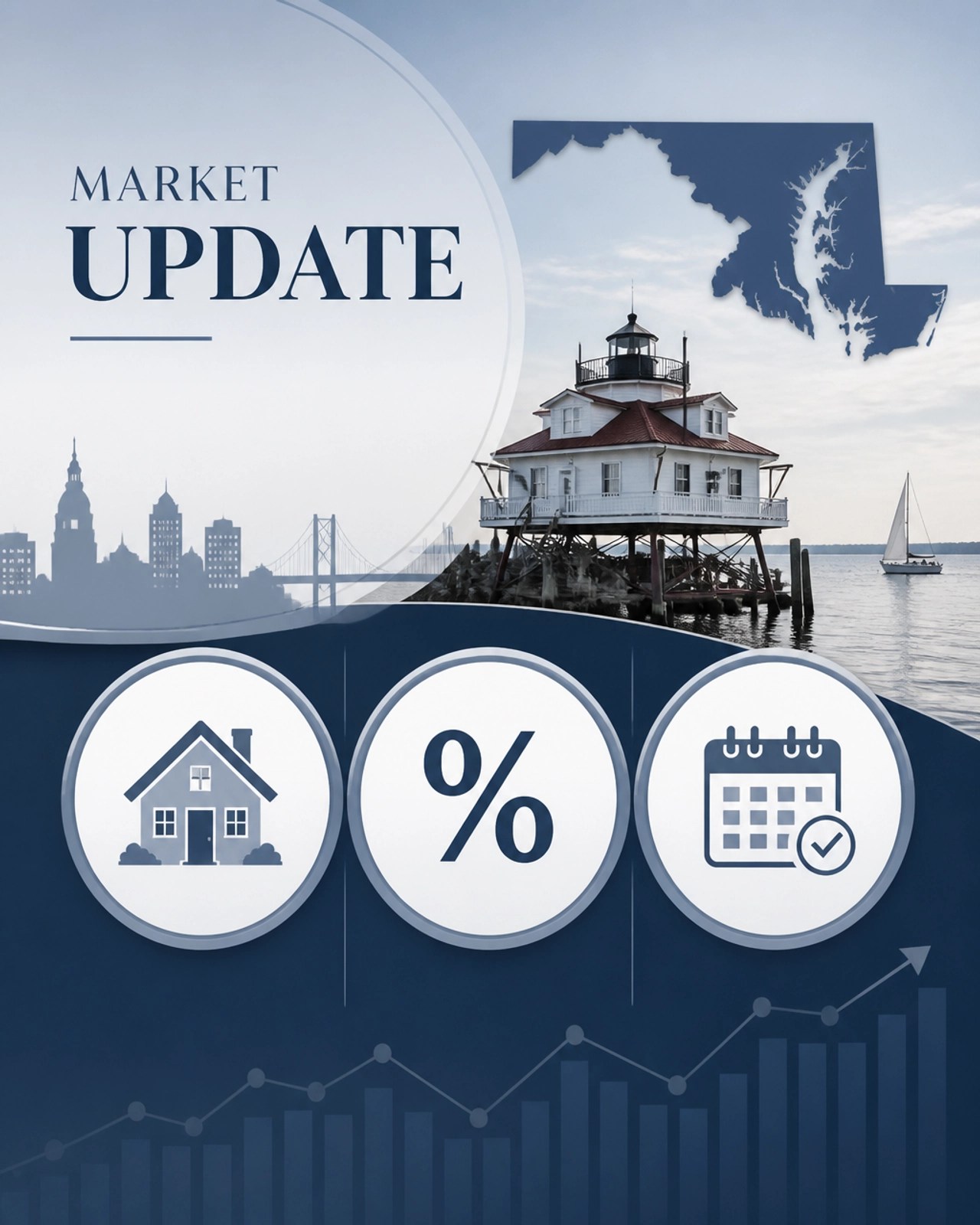
    Maryland Real Estate 2026 Market Update Graphic

    Step 1: Shift Your Focus from "Price" to "Payment"

    In 2026, the most successful buyers aren't just looking at the sticker price of a home; they are obsessed with the monthly payment. With mortgage rates for conventional loans currently ranging between 6.3% and 7.0%, your borrowing power is different than it was when rates were at historic lows.

    Why the Monthly Number Matters

    When you focus solely on the purchase price, you might miss the impact of Maryland’s specific property taxes or varying HOA fees. A $450,000 home in one county might have a vastly different monthly carry than the same price point in a neighboring county.

    As a liaison to the process, I always encourage buyers to work closely with their mortgage professional to establish a "payment ceiling." This ensures that when we find a property that fits your lifestyle, the numbers also fit your long-term financial clarity. We want you to love the home and the lifestyle it allows you to lead.

    Step 2: Leverage the "Price Improved" Opportunity

    One of the most interesting shifts in 2026 is the return of the Price Reduction. About a third of homes in Maryland are still selling above list price, but that means two-thirds are not.

    A For Sale sign with a Price Improved rider in a Maryland neighborhood

    When a home has been on the market longer than the 43-day median, it often signals an opportunity for negotiation. In 2026, "stale" listings are often just homes that were slightly over-ambitious with their initial pricing. These properties can be gems for buyers who are willing to look past a "Days on Market" counter and instead focus on the underlying value of the asset.

    Strategic Negotiation

    Unlike the 2021 market where buyers were waiving inspections and appraisals, the 2026 market allows for more traditional protections. We are seeing a return to:

    • Home Inspection Contingencies: Ensuring the "bones" of the house are solid.
    • Appraisal Gaps: Becoming less common as pricing stabilizes.
    • Seller Concessions: Asking for help with closing costs or interest rate buy-downs is back on the table in many Maryland sub-markets.

    Step 3: Understanding Regional Micro-Markets

    Maryland is often called "America in Miniature," and our real estate market reflects that. You cannot apply a "one size fits all" strategy to the entire state.

    The DC Commuter Corridor (Montgomery & Prince George’s Counties)

    Inventory remains tightest here. Competition is still high for properties near Metro stations or major commuter routes like I-270 and the Beltway. If you are looking in these areas, your offer needs to be clean and your pre-approval must be rock solid.

    The Baltimore Suburbs (Anne Arundel, Howard, & Baltimore Counties)

    These areas are seeing some of the healthiest inventory growth. Families looking for more space are finding more options in places like Millersville, Gambrills, and Columbia. You can view some of the current local opportunities and styles in these areas by visiting Lamont Milbourne’s Real Estate Portal.

    The "Slower" Markets

    In more rural or distant suburbs, days on market can stretch beyond 60 days. For a patient buyer, these areas offer the greatest potential for price negotiations and seller-funded repairs.

    Step 4: The Importance of Professional Guidance

    Buying a home is likely the largest financial transaction of your life. In a market that is "easing but still competitive," having a liaison who understands the nuances of Maryland contracts and local trends is vital.

    My role at K-Stone Enterprises is to act as your information resource. Whether you are a first-time buyer trying to understand the process or an experienced homeowner looking to level up, I focus on providing the education and deal analysis support you need to make an informed decision.

    Professional real estate consultation session

    We don't believe in pressure or "hype." We believe in data, strategy, and clear next steps. You can learn more about my background as a U.S. Army veteran and licensed Maryland real estate professional on my About Page.

    Moving Forward with Clarity

    The Maryland market in 2026 offers a unique window for those who have been waiting on the sidelines. Inventory is up 12% over last year, giving you more choices than we’ve seen in a long time. While rates are higher than the 3% era, they have stabilized, allowing you to plan your budget with certainty.

    The key to succeeding this year is simple: Don't guess. Know.

    Know your budget, know your neighborhood, and know what a "good deal" looks like for your specific situation. If you see a property that catches your eye, or if you want to start the conversation about what's available in your target area, let’s get the information you need.

    Want this kind of insight every week? Join the Inner Circle — it's free and it keeps you ahead of the curve in the MD market.

    Send me the property address or basic details and I’ll let you know what information would be needed for the next step.

    Reply “INFO” and I’ll send the next step.

    🧵 Check out Twisted Emotions (Threaded Creations KLM) on Etsy — unique, handcrafted apparel that lets you wear your story. Browse the shop here: https://threadedcreationsklm.etsy.com

  • 7 Mistakes You’re Making with Your Household Debt (and How to Fix Them)

    7 Mistakes You’re Making with Your Household Debt (and How to Fix Them)

    Let’s be real for a second: debt isn’t just a number on a screen. It’s a weight. It’s that low-level hum of anxiety that kicks in when you open your banking app or see a letter from a creditor in the mail.

    As we move through 2026, the financial landscape has shifted. According to recent data, total U.S. household debt has climbed to a staggering $18.8 trillion. If you feel like your balances are creeping up faster than your paycheck, you aren't alone. In Maryland specifically, we’ve seen some of the sharpest increases in consumer debt in the nation, with average credit card balances hitting nearly $12,500 per household in some areas.

    But here’s the good news: debt doesn’t have to be a life sentence. Most of the "stuck" feeling comes from a few common, repeatable mistakes that almost everyone makes. When you identify the mistake, you can fix the strategy.

    At K-Stone Enterprises, we believe in financial clarity. You can’t win a game if you don’t know the rules or where you are on the field. So, let’s pull back the curtain on the seven biggest mistakes people are making with their household debt right now and how you can start moving toward a smarter path.

    📬 Join the Inner Circle — Get weekly financial clarity insights straight to your inbox. Most people don't know what's coming. You will. Subscribe now and get the unfair advantage.

    🗳️ Poll: What's your biggest money stress right now?

    Be honest — knowing where you're at is the first step. Drop your answer below!

    A) Credit card debt and high interest rates
    B) Not knowing where my money goes each month
    C) Feeling stuck — no idea where to start
    D) Actually feeling pretty good — just here for the tips

    1. The Minimum Payment "Treadmill"

    Illustration of the minimum payment treadmill where the belt is made of credit cards and bills.

    This is the most common trap in the book. You get your credit card statement, see a $5,000 balance, but the "Minimum Payment Due" is only $125. It feels manageable, so you pay it and move on.

    The problem? Paying only the minimum is like trying to run a marathon on a treadmill that’s moving backward. Because of how interest is calculated, a huge chunk of that $125 goes toward the interest, not the actual debt. In some cases, it can take 20+ years to pay off a single balance if you only stick to the minimums.

    How to Fix It: Awareness is your first weapon. Look at your statement, by law, they have to show you how long it will take to pay off the balance if you only pay the minimum. It’s usually a wake-up call. Aim to pay even $20 or $50 above the minimum. Every extra dollar goes directly toward the principal, which reduces the amount of interest you’re charged next month.

    2. Ignoring the "Interest Vampire"

    Interest rates in 2026 are no joke. Many credit cards now carry APRs north of 20% or even 25%. If you aren't looking at those rates, you are essentially letting an "Interest Vampire" bleed your bank account dry every single month.

    When you ignore the rate, you lose the ability to prioritize. Not all debt is created equal. A 4% mortgage is a completely different animal than a 28% store credit card.

    How to Fix It: List out every debt you have, from highest interest rate to lowest. This gives you a clear target. You don't necessarily have to pay them all off at once, but you should know which ones are costing you the most to keep around. Education on interest awareness is the first step to stopping the bleed.

    3. Delinquency Denial

    With auto and credit card delinquency rates hitting 16-year highs this year, many people are choosing the "Ostrich Strategy", sticking their head in the sand and hoping the problem goes away.

    Ignoring a late payment or a collection notice doesn’t make it disappear; it makes it more expensive. In Maryland, debt collection practices can be aggressive. Once a debt moves into the legal or collection phase, your options for negotiation shrink, and the fees start to stack up.

    How to Fix It: Face the mail. If you’re falling behind, the best thing you can do is seek education on your rights and the status of your accounts. Knowing exactly where you stand with your creditors allows you to make informed decisions rather than reactive ones.

    4. Using Credit to Fill the Lifestyle Gap

    A motivational finance graphic asking about the importance of debt elimination and keeping more of your paycheck.

    Many households use credit cards to bridge the gap between their income and their lifestyle. Maybe it’s a dinner out, a new gadget, or even just groceries because the checking account is low.

    When you use debt to fund daily life without a plan to pay it back immediately, you’re essentially borrowing from your future self. You're trading tomorrow’s freedom for today’s comfort.

    How to Fix It: This mistake usually points to a need for better cash flow awareness. Instead of reaching for the plastic, ask: "Do I have the cash for this?" If the answer is no, it’s an opportunity to review your household budget and see where your money is actually going. Small shifts in awareness can lead to big changes in debt habits.

    5. The 84-Month Auto Loan Trap

    Cars are more expensive than ever, and to make the monthly payments "affordable," many lenders are pushing 72-month or even 84-month loans.

    While the monthly payment looks small, a 7-year loan on a depreciating asset is a recipe for "negative equity." This means you owe more on the car than it’s worth for almost the entire life of the loan. If you need to sell the car or if it gets totaled, you’re stuck with a "gap" you have to pay out of pocket.

    How to Fix It: When shopping for a vehicle, look at the total cost of the loan, not just the monthly payment. Be conservative with your targets. A shorter loan might mean a higher monthly payment, but it also means you’ll actually own the asset sooner and pay significantly less in interest over time.

    6. The "Invisible" Debt-to-Income (DTI) Ratio

    A magnifying glass bringing clarity to organized financial documents.

    Your Debt-to-Income ratio is a number that lenders use to decide if they’ll give you a mortgage or a business loan. Many people have no idea what theirs is until they get rejected for a loan they really need.

    If more than 36-43% of your gross monthly income is going toward debt payments, you are in the "danger zone." This high DTI makes you a "risky" borrower, which usually leads to higher interest rates on future loans: creating a cycle that’s hard to break.

    How to Fix It: Calculate your DTI today. Add up all your monthly debt payments (rent/mortgage, cars, credit card minimums, student loans) and divide that by your gross monthly income. If the number is high, your goal shouldn't just be "paying off debt," but "lowering your DTI." This creates the clarity needed to improve your financial standing.

    7. The "Lone Wolf" Strategy

    The biggest mistake of all? Trying to figure it all out by yourself. Financial education isn't taught in most schools, yet we're expected to navigate complex interest rates, tax awareness, and credit education on our own.

    Many people feel a sense of shame about their debt, so they keep it a secret. They try to out-earn their bad habits, but without a fundamental shift in financial education, the cycle usually repeats.

    How to Fix It: Seek resources. There is a whole world of financial education designed to give you clarity on credit, taxes, and debt. You don't have to be a math genius to master your money; you just need access to the right information and a clear path forward.

    A promotional graphic for the S.I.M.P.L.E Leverage Everything event focusing on wealth protection and leverage.

    Moving Forward with Clarity

    Debt doesn't have to be your identity. It’s just a financial state, and states can change. By avoiding these seven common mistakes, you’re already ahead of the curve.

    The goal isn't just to "get out of debt": it's to gain the education and awareness so that you never end up back in the same cycle. Whether it’s understanding how your credit works, becoming more aware of your tax obligations, or learning how to negotiate your monthly bills, every bit of knowledge adds up to more freedom.

    At K-Stone Enterprises, we are committed to being your liaison to the resources that help you move smart with understanding and clarity.

    Want this kind of insight every week? Join the Inner Circle — it's free and it keeps you ahead of the curve.

    Review the information here when ready: www.mwrfinancial.com/krnrstn21

    Want me to send you the information so you can review how it works?

    🧵 Check out Twisted Emotions (Threaded Creations KLM) on Etsy — unique, handcrafted apparel that lets you wear your story. Browse the shop here: https://threadedcreationsklm.etsy.com

  • Selling to an Investor vs. Listing on the MLS: Which Is Better For Your Maryland Home?

    Selling to an Investor vs. Listing on the MLS: Which Is Better For Your Maryland Home?

    Deciding to sell your home is one of the biggest financial moves you’ll ever make. In Maryland’s 2026 real estate market, that decision comes with a new set of layers. We aren't in the "wild west" market of a few years ago, but inventory is still tight and buyers are still hungry for the right property.

    📬 Join the Inner Circle — Get weekly Maryland market updates straight to your inbox. Most sellers don't know what's coming. You will. Subscribe now and get the unfair advantage.

    When you’re ready to move, you generally find yourself at a fork in the road: Do you list the home on the Multiple Listing Service (MLS) with a professional agent, or do you take the direct route and sell to a real estate investor?

    Neither choice is "wrong," but one is likely much better for your specific goals. My goal today is to give you the clarity and understanding you need to move smart. No hype, no pressure: just the facts about how these two paths play out in our local market.

    The 2026 Maryland Market Snapshot

    To make a smart move, you have to know what the ground looks like right now. As we move through 2026, Maryland is seeing a steady, healthy market.

    • Price Growth: We’re seeing a modest appreciation of about 2% to 4% statewide. It’s not a "bubble," but it’s certainly not a crash.
    • Inventory: Supply remains tight, hovering around 3 months. This means sellers still hold a fair amount of leverage because there are more buyers than there are available houses.
    • Time on Market: On average, homes are sitting for about 35 to 46 days before going under contract.

    With that context, let’s look at your two main options.

    Option 1: Listing on the MLS (The "Top Dollar" Path)

    Listing on the MLS is the traditional way to sell. When your home is on the MLS, it’s syndicated to every major real estate site (like Zillow, Realtor.com, and OneReal) and becomes visible to every licensed agent in the state.

    The Pros:

    1. Maximum Exposure: This is the biggest advantage. By putting your home in front of thousands of potential buyers, you create competition. In a tight-inventory market like Maryland, competition often leads to multiple offers and higher sale prices.
    2. Market Value Discovery: The MLS is the only way to truly "test" the market. If you want to know the absolute maximum someone is willing to pay for your home, the MLS will tell you.
    3. Better Pricing Power: Statistics show that homes exposed to the open market generally sell for significantly more than those sold in private, off-market deals.

    The Cons:

    1. Showings and Prep: You have to keep the house "show-ready." This means cleaning, potentially painting, and dealing with people walking through your home on short notice.
    2. The Timeline: From the day you list to the day you actually get your check, you’re looking at a 60-to-90-day window (including the 30-45 days for the buyer’s mortgage process).
    3. Transaction Risks: Traditional buyers usually have contingencies for financing, inspections, and appraisals. If any of these go sideways, the deal can fall through, putting you back at square one.

    Infographic comparing MLS Listing (Price) vs. Investor Sale (Speed)

    Option 2: Selling to an Investor (The "Speed & Certainty" Path)

    Selling to an investor (often called a "cash offer" or "off-market" sale) is a completely different animal. You aren’t looking for a family to move in; you’re looking for a professional buyer who wants the asset.

    The Pros:

    1. Speed: Investors don’t need 30 days for a mortgage. Many can close in as little as 7 to 14 days. If you’re relocating for a job or have a deadline, this is a huge win.
    2. "As-Is" Condition: This is the heavy hitter for many Maryland homeowners. If the roof is old, the carpet is stained, or the kitchen is from 1982, an investor doesn’t care. You don’t have to pick up a paintbrush or a hammer.
    3. Certainty: Cash offers usually come with fewer contingencies. There’s no appraisal to worry about and no bank that could deny the loan at the last minute.

    The Cons:

    1. The Convenience Fee: You are essentially trading equity for convenience. Because the investor is taking on the risk of repairs and the cost of holding the property, their offer will be lower than what you’d get on the open market.
    2. No Competition: Without the MLS, you only have one buyer. You lose the leverage of having five other people wanting the house.

    Side-by-Side: Which Fits Your Life?

    Feature Listing on the MLS Selling to an Investor
    Final Sale Price Higher (Market Value) Lower (Discounted)
    Closing Time 60 – 90 Days 7 – 14 Days
    Repairs Needed Often required for top dollar None (Sold "As-Is")
    Commission/Fees Traditional commissions apply Usually no commissions
    Privacy Public (Photos & Price online) Private (Off-market)

    A peaceful Maryland neighborhood street representing the local market context.

    The "Maryland Factor": Local Considerations

    In Maryland, our geography matters. If you have a townhome in a high-demand area like Columbia or a single-family home in Millersville, listing on the MLS might net you a much higher return because the buyer demand in those "sweet spots" is incredibly high.

    On the other hand, if you’re dealing with a vacant property, an inherited home that needs a total gut-job, or an absentee-owner situation where you just can’t manage the upkeep from afar, the investor route can be a lifesaver. It stops the "bleeding" of taxes, insurance, and maintenance costs immediately.

    Making the Smart Move

    The decision shouldn't be based on a "gut feeling." It should be based on a net-sheet comparison.

    Think of it this way:

    • Step A: What would the house sell for on the MLS? (Subtract commissions, closing costs, and the cost of repairs you’d need to do).
    • Step B: What is the investor offering "as-is"?

    The difference between those two numbers is the "Convenience Cost." For some, that cost is $30,000 and it’s not worth it. For others, that cost is $10,000, and avoiding three months of stress and $15,000 in repairs makes the investor offer the smarter choice.

    A professional reviewing real estate documents, providing clarity to the reader.

    We’re Here to Help You Sort the Details

    At K-Stone Enterprises, we believe in giving you the information first. Whether you want to explore listing your home for maximum exposure or you want to see what an "as-is" transition looks like, we can help you review the data for your specific Maryland property.

    You deserve to move with clarity, knowing you chose the path that fits your timeline and your wallet.

    Want this kind of insight every week? Join the Inner Circle — it's free and it keeps you ahead of the curve in the MD market.

    Send me the property address or basic details and I’ll let you know what information would be needed for the next step.


    Sonny, here is a tweet draft for the post:
    "Selling your Maryland home in 2026? 🏠 Should you list on the MLS for top dollar or sell to an investor for speed? We’re breaking down the pros, cons, and the 'convenience fee' so you can move with clarity. Read more on the blog! #MarylandRealEstate #HomeSellingTips #KStoneEnterprises"

    🧵 Check out Twisted Emotions (Threaded Creations KLM) on Etsy — unique, handcrafted apparel that lets you wear your story. Browse the shop here: https://threadedcreationsklm.etsy.com