
Getting capital for your business in 2026 isn’t what it used to be. If you’re still walking into a local bank branch with a 50-page printed business plan and a handshake, you might be in for a surprise. The landscape has shifted. Traditional banks are becoming more selective, while fintech, embedded finance, and AI-driven underwriting are taking over the driver's seat.
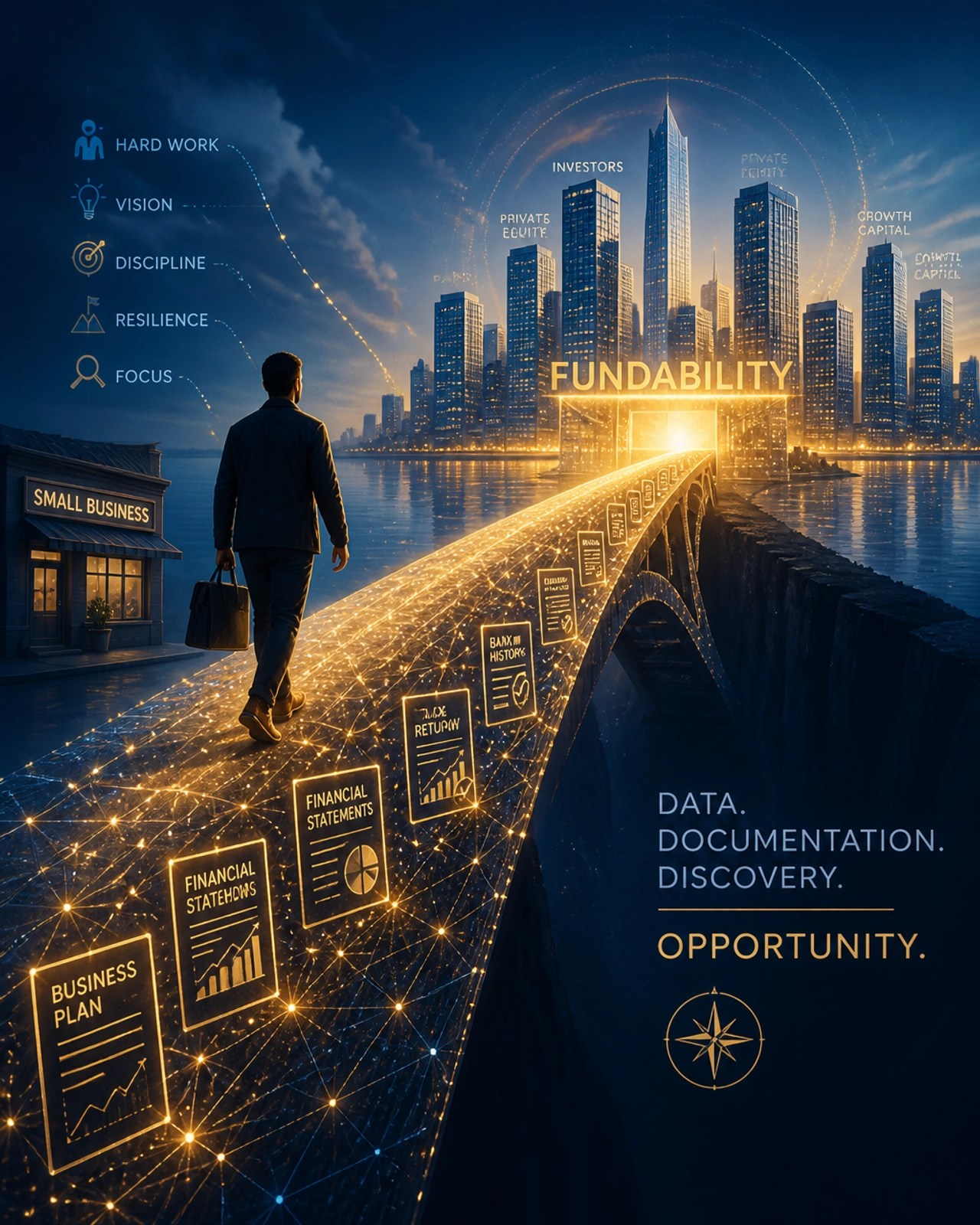
At K-Stone Enterprises, we see a lot of entrepreneurs who have the passion and the product, but they lack the "fundability" profile that modern lenders require. Lamont Milbourne acts as your liaison to the resources and information you need to bridge that gap. We don’t guarantee funding: no one should: but we do believe in the power of financial education to put you in the best possible position.
Here are 10 things you need to know about the modern requirements for business funding in today’s market.
1. The Shift from Banks to Fintech
The most significant trend in 2026 is where the money is coming from. Traditional banks have become "slower and pickier," with over 76% of small businesses now bypassing them entirely. For deals under $250,000, non-bank and online lenders have become the primary source of capital. These lenders prioritize speed and digital data over traditional collateral. If you want funding fast, you need to look where the modern market is moving.
2. Your "Fundability" Profile is Your New Business Card
Lenders are looking at more than just your revenue. They are looking at your business's legitimacy. Do you have a professional business address (not a P.O. Box)? Is your business phone number listed in 411 directories? Is your email address professional, or is it still a generic @gmail account? In 2026, these small details are often the first "knock-out" criteria used by automated underwriting systems.

3. The Power of the D-U-N-S Number
If you don’t have a D-U-N-S number, your business essentially doesn’t exist to the major credit bureaus. Issued by Dun & Bradstreet, this nine-digit ID is the foundation of your business credit profile. Without it, you can’t generate a PAYDEX score, which is the "FICO" of the business world. Registering for this is a critical first step in moving away from relying solely on your personal credit.
4. Aim for a PAYDEX Score of 80+
Your PAYDEX score (ranging from 0 to 100) is based entirely on how you pay your vendors. To be competitive for the best rates and terms in 2026, you should aim for a score of 80 or higher. Achieving this requires having at least three to five trade lines reporting to the bureaus and: this is the secret: paying those vendors 10 to 15 days early. In a digital-first world, "on time" is the bare minimum; "early" is what gets you the best funding.
5. Personal Credit Still Matters (The "PG" Factor)
Many entrepreneurs hope to get business funding with zero personal liability. While that’s the ultimate goal, most modern lenders still require a Personal Guarantee (PG) for newer businesses or smaller lines of credit. Your personal credit score acts as a safety net for the lender. Keeping your personal credit education a priority is just as important as building your business credit.

6. DSCR: The Magic Number is 1.25
Lenders in 2026 are obsessed with your Debt Service Coverage Ratio (DSCR). This is a simple calculation: your operating income divided by your total debt payments. Most traditional and SBA-type lenders want to see a DSCR of 1.25 or higher. This means for every $1 you owe in debt, your business should be bringing in at least $1.25 in profit. If you’re below 1.0, you are technically unable to cover your obligations, and funding will be nearly impossible to secure.
7. Clean Digital Records are Non-Negotiable
Modern underwriting is increasingly driven by AI. Lenders will often ask to "connect" to your bank feeds, QuickBooks, or Shopify accounts. They aren't just looking at the total numbers; they are looking for patterns. Frequent overdrafts, inconsistent deposits, or commingling personal and business funds will trigger red flags in an automated system before a human even sees your application.
8. Embedded Finance is the New Frontier
Have you noticed Shopify Capital or Square Capital offering you funds inside your dashboard? This is "embedded finance." These offers are based on your actual sales data within those platforms. While convenient, it’s important to understand the cost of this capital. Often, these are Merchant Cash Advances (MCAs) with daily or weekly repayments that can strain your cash flow if you aren't careful.

9. Time in Business vs. Revenue Trends
In the past, "two years in business" was the ironclad rule. In 2026, lenders are becoming more flexible on the time if the trend is strong. If you can show six months of consistent, growing revenue through a digital ledger, you may qualify for fintech funding even if you haven't hit the two-year mark. However, for the lowest interest rates (like SBA loans), that two-year history remains the gold standard.
10. The Value of a Professional Liaison
Navigating the world of business funding is complex, and the requirements change monthly. You don't have to do it alone. Working with a liaison like Lamont Milbourne allows you to access educational resources that explain how these systems work. Our goal is to move you toward a state of "funding readiness" so that when you do apply, you aren't guessing: you’re prepared.
Getting Started with Financial Clarity
Education is the ultimate leverage. Whether you're looking to scale an existing business or get a new venture off the ground, understanding the "why" behind lending decisions is your greatest asset. We invite you to review the information and tools available through MWR Financial to help you sharpen your financial profile.

Want me to send you the information so you can review how it works?
Review the information here when ready: www.mwrfinancial.com/krnrstn21
Sonny, here is a tweet draft for this post:
"Modern business funding is moving faster than ever in 2026. 🚀 If you're still relying on traditional banks, you might be missing out on the fintech revolution. Check out our latest guide on the 10 things you NEED to know about modern fundability. #BusinessFunding #FinancialEducation #KStoneEnterprises"
Leave a Reply