Everyday Millionaires: Why ‘Rich’ Looks Different in 2025 (And How You Can Join Them)

The Explosive Growth of Everyday Millionaires
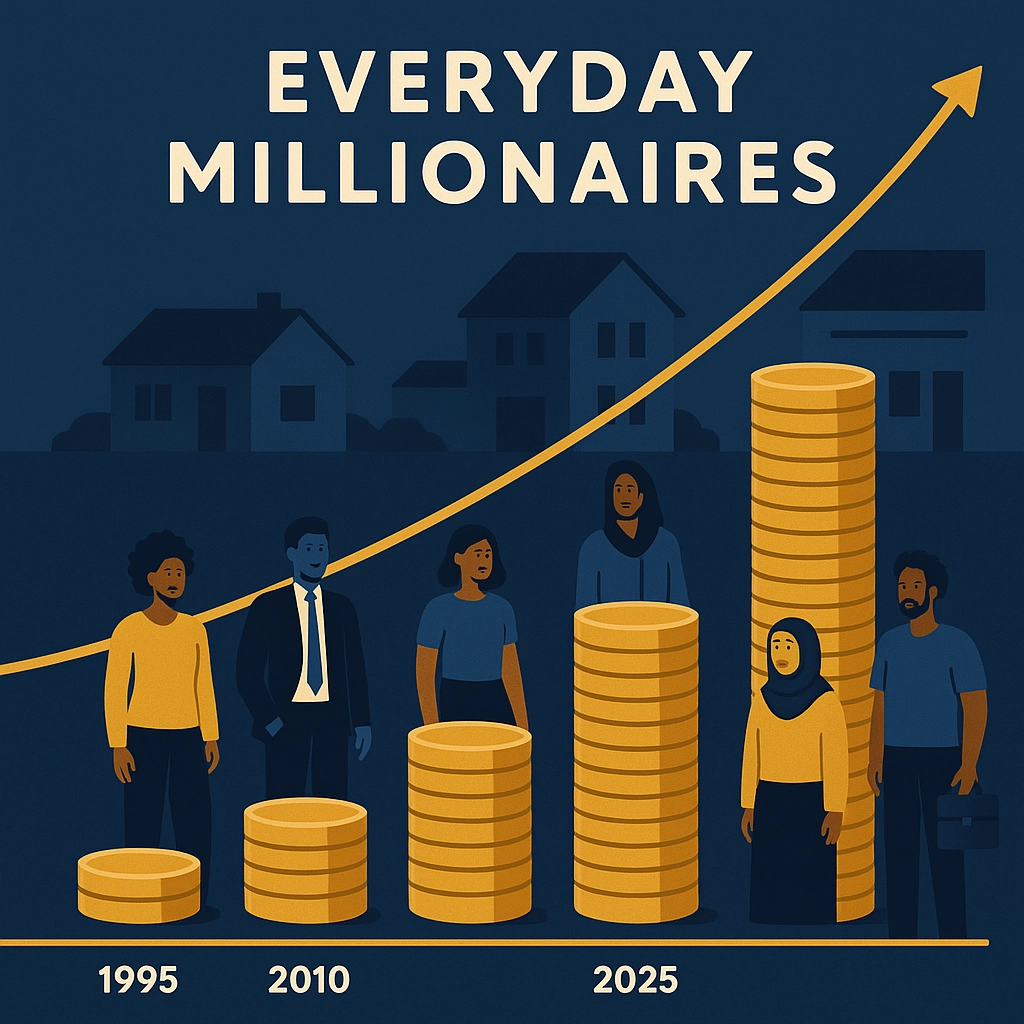
Let’s face it: the word “millionaire” doesn’t pack the same punch in 2025 as it did thirty, or even ten, years ago. Back in the mid-90s, the IRS counted about 1.6 million Americans with a net worth of $1 million or more. Fast forward to today, and that number has skyrocketed to a jaw-dropping 23.8 million Americans.
That’s a nearly 15x jump. Repeat: fifteen times as many millionaires now walk among us as there were just a generation ago! According to the 2025 UBS Global Wealth Report, these “Everyday Millionaires”—sometimes called EMILLIs—have become a normal part of the American financial landscape, rewriting what it means to truly be wealthy.
It’s not flashy inheritances, crazy stock picks, or superstar careers fueling this explosion either. Instead, it’s been steady, strategic, and, honestly, pretty relatable. The Great Wealth Transfer (baby boomers passing on trillions), along with years of consistent housing appreciation and disciplined investing, have all contributed.
Why “Millionaire” Doesn’t Feel Rich Anymore
If you’re picturing mansions, private jets, and a fridge full of caviar when you hear “millionaire,” you might be stuck in the past. For most of today’s everyday millionaires, life is a lot more Target runs and a lot fewer Ferraris-in-the-driveway.
Why is that?
- Cost of Living Reality: In 2025, $1 million doesn’t have the purchasing power it used to. Groceries, gas, healthcare, and especially housing have all gone up. Today’s million isn’t yesterday’s million.
- House-Rich, Cash-Poor: For many, a big chunk of their net worth is tied up in their primary residence. Yes, the Zillow estimate looks great, but you can’t exactly live off your home value.
- Lifestyle Inflation: As people earn more, they often spend more—on nicer homes, schooling, cars, and experiences—raising the bar for what “rich” feels like.
Take Heidi Barley, for example. She grew up on food stamps, had to leave college early for financial reasons, and spent most of her twenties making $34k a year in corporate America. But through disciplined saving and investing, she joined the seven-figure club by 41. When asked if she feels rich, she laughs. “It doesn’t feel like what you think it would,” she says. And she’s not alone—many everyday millionaires feel more “stable” than “rich.”
How the Everyday Millionaire Looks in 2025
What’s the real profile of a new-age millionaire? Here are some characteristics that break the old-school mold:
- They’re Not Usually Entrepreneurs or Celebrities: Most are people you’d never peg as “rich.” According to studies like Chris Hogan’s Everyday Millionaires, they’re teachers, engineers, managers—regular folks with regular jobs.
- Net Worth, Not Paycheck: The majority didn’t hit their status with a giant windfall or a lucky break. Instead, slow accumulation, home ownership, and investing played the biggest roles.
- Disciplined Investors: They started early (often in their 20s or 30s) and invested consistently, riding out market ups and downs.
- Living Below Their Means: Flashy spending was rarely part of the plan. They focused on needs vs. wants and prioritized savings goals along the way.

Wealth Is Growing, But Not For Everyone
Even though there are more American millionaires than ever, that doesn’t mean everyone’s getting rich. In fact, the gap between the “haves” and the “have-nots” is bigger than ever.
- The top 10% of U.S. households control more than two-thirds of the country’s wealth (with an average of $8.1 million each).
- The bottom 50%? Barely 3% of the country’s wealth, with an average net worth of only $60,000.
And the disparities don’t stop there. While median wealth for Asian and white Americans has risen, Black and Hispanic Americans still trail far behind. The dream might be more achievable, but not everyone has the same starting line.
Lessons from the Everyday Millionaires
So, what can we learn from America’s ordinary millionaires? Turns out, it isn’t about getting lucky—it’s about building good habits and sticking with them. Here are some common threads pulled from research and real-life stories:
1. Invest Consistently—No Matter What
Most everyday millionaires started small. For instance, after leaving her job, Heidi Barley rolled over her $5,000 pension into a retirement account and added bits and pieces over the years. Even when the markets tanked, she stuck with her plan. The lesson? Don’t try to time the market—just keep putting money in.
2. Play the (Very) Long Game
Building wealth is never instant. There were years when balances dipped, houses lost value, and the temptation to cash out was huge. But sticking it out, especially through events like the Great Recession or the downturn in 2020, tends to pay off in the long term.
3. Find Emotional Motivation
Money isn’t just math—it’s mindset. Many everyday millionaires talk about finding real happiness in tracking their progress. “I found catharsis in amassing savings—I’d check my accounts when I had a rough day,” Barley says.
4. Avoid Lifestyle Creep
As incomes rise, natural temptation is to splurge. But the everyday millionaire almost always lives below their means, preferring security over status. Fancy cars and gadgets are nice, but financial freedom tastes better.
5. Own (at Least) One Home
The American dream! While it’s not the only path, homeownership has remained one of the most common wealth-building tools, thanks to decades of appreciation and its forced-savings effect.

Can You Become an Everyday Millionaire? (Spoiler: Yes)
The data makes it clear: you don’t need a massive paycheck, hedge-fund pedigree, or even a big inheritance to join the seven-figure club. What you do need is a plan.
Here’s a simple framework inspired by what’s working for America’s 23.8 million everyday millionaires:
Step 1: Track Your Net Worth Not your income—your net worth (assets minus debts). It’s the best snapshot of your real financial health.
Step 2: Automate Your Saving Set up recurring transfers to a retirement account, investment account, or high-yield savings. Do it first, before you spend a dime.
Step 3: Start Early—But It’s Never Too Late The best time to save was yesterday; the next best is today. Whether you’re 25 or 55, the principles apply.
Step 4: Invest Simply and Consistently Think broad index funds, low fees, and stick with it for decades, not months.
Step 5: Live Below Your Means Keep fixed expenses low, avoid debt traps, and don’t get fooled by lifestyle inflation.
If all that feels overwhelming, you’re not alone. A great next step is connecting with a coach or team that’s dedicated to helping ordinary people become extraordinary with their finances. (If you want some expert help, check out the MAKE WEALTH REAL team here—we’re all about helping people like you level up!)
The Bottom Line: Wealth Looks Different—But More Achievable—Than Ever
Millionaire status isn’t the finish line—it’s just a solid checkpoint on the pathway to true financial freedom and independence. The truth from 2025: being “rich” today is more about security, options, and peace of mind than pure bling.
So don’t count yourself out. The playbook is proven, and you don’t need to win the lottery. Start with what you have, build your habits, and commit for the long haul. You might just surprise yourself—and join the millions of Americans making wealth real every day.
 Legacy by Design | Trusted Wealth Strategies for Real People
Leave a comment